




Not long ago, we hosted a session diving into how tools like ChatGPT interact with B2B brands, with a sharp focus on Large Language Models (LLMs) and AI-powered search. That shift alone opens up new doors for traffic and leads, especially from people already curious and ready to act.
Things are changing fast. We’re moving away from the usual Google searches and stepping into a world where ChatGPT and other AI tools are taking center stage. At one point during the webinar, I ran a quick poll with a simple question: Where do you go first when you need to research a company or a tool – Google or ChatGPT? I asked attendees to rate their habits on a scale from 0 to 10. A score of 0 meant “I’ll Google it, every time.” A 5 meant they used both Google and ChatGPT equally. And a 10? That meant they were fully leaning on ChatGPT to get their answers.
The poll made it clear: a growing number of people now lean on ChatGPT for their research needs. For B2B marketers, ignoring this trend could mean missing out on leads that never even touch your website.
In this blog, we’ll discuss more about how ChatGPT currently sees us, and by “us,” I mean B2B brands. We’ll explore what helps or hurts your current visibility on AI-powered platforms and what we can do to start fixing gaps now, even if we have limited resources or a small team.
04
Aug
What ChatGPT Really Knows (and Gets Wrong) About Your B2B Brand
Contents
Understanding Your Brand Visibility on AI
We explored how AI models perceive B2B brands, particularly focusing on memory-based knowledge. Models like ChatGPT rely on snapshots of knowledge available at the time they’re trained, typically up to mid-to-late 2024. Understanding this memory-based knowledge is crucial because it directly influences how your brand is portrayed during AI searches.
What If You Could See What ChatGPT Really Knows About Your Brand?
As these shifts in AI-powered search unfold, one question becomes increasingly critical: How accurately does ChatGPT represent your brand, and what are the consequences if it doesn’t?
For B2B marketers, sales leaders, and founders, this visibility gap can influence how prospects, partners, and even investors perceive your value. That’s what led us to create Vertology – an easy-to-use tool that lets you see what AI platforms actually say about your brand.
About our Vertology
As more professionals turn to AI platforms like ChatGPT for quick answers and business insights, the way these tools portray your brand is starting to matter more than ever. Whether someone is exploring service providers, researching competitors, or looking up thought leaders, their first impression may now be shaped by a conversation with a language model rather than a traditional Google search.
But is that impression actually accurate?
That question led to the creation of Vertology. It is a no-code tool built with one clear purpose: to show brands exactly how AI models like ChatGPT are perceiving them. As more business decisions begin with an AI-generated answer, knowing what these tools say about your company has become more than just a curiosity. It is a strategic necessity.
Vertology helps bring that picture into focus. It reveals what the model has retained about your brand and compares it with what is currently visible online. In many cases, the gap between those two versions is wider than expected. For companies that care about reputation, consistency, and control, that insight is essential.
The Rise of AI Search and a New Kind of Brand Monitoring
Traditional SEO has always focused on optimizing content for search engines based on how algorithms rank pages. But AI search operates differently. When someone asks ChatGPT about your company, the response is generated using a mix of static data from the model’s training and real-time data retrieved from the web, depending on the model’s configuration.
This combination often leads to fragmented or outdated representations. A company might be incorrectly associated with unrelated brands or cited based on content that no longer accurately reflects its services, focus, or strategic direction. These inconsistencies can weaken positioning, misguide prospects, or undermine credibility, especially in high-stakes B2B environments. This is where Vertology provides meaningful value.
Turning Insight into Action
Understanding how AI represents your brand is only the first step. How you react to that realization is what counts. In order to make visibility something that teams can actively control, Vertology was created with that next step in mind. The tool assists businesses in determining whether their intended positioning is in line with what is actually being communicated across the digital landscape by identifying the sources from which AI models are derived and contrasting them with existing online content.
Its reporting features are made to be clear and collaborative. Marketing, communications, and strategy teams can swiftly comprehend the results, identify any inconsistencies, and decide where to update content or improve messaging. The ultimate objective is to make sure your brand is represented in AI-generated responses, not just to show up in them.
Why It Matters for B2B and SaaS Brands
Vertology proves especially valuable for companies in complex, high-stakes industries like B2B technology and SaaS. In these sectors, reputation is not built solely on what a brand says about itself. It is equally shaped by how others describe it, and increasingly by how AI tools like ChatGPT interpret and repeat those references.
Consider a B2B agency that specializes in enterprise software. A memory audit might reveal that ChatGPT associates it with well-known platforms like HubSpot or Hootsuite. While that may seem like a flattering comparison at first glance, it can be misleading if the agency serves a different client base or delivers entirely different services.
This is where Vertology adds real value. The platform does more than surface inconsistencies. It provides teams with a clear side-by-side view of what the AI model retains from its training compared to what it sees on the live web. Reports include source citations, comparative brand mentions, and structured recommendations that can support SEO, content strategy, media outreach, or investor communications.
Practical Applications Beyond Visibility
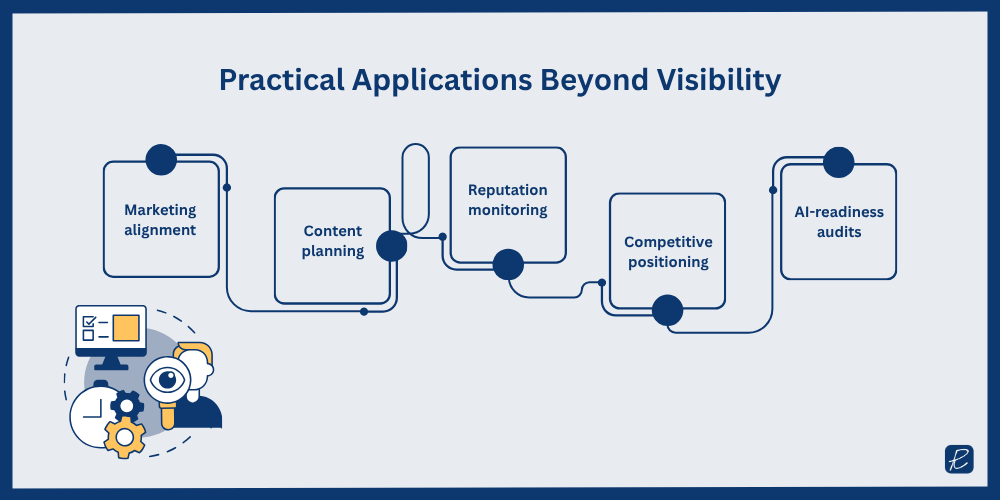 While Vertology was built to enhance brand visibility across AI platforms, its value extends well beyond that core function. Teams in marketing, content, communications, and strategy are already using it to support a range of initiatives. Here are some of the key ways they are putting it to use:
- Marketing alignment: Assessing how AI tools describe the brand and ensuring that messaging is reflected accurately.
- Content planning: Identifying high-value opportunities to strengthen the presence of authoritative content that AI models reference.
- Reputation monitoring: Detecting outdated or inaccurate brand descriptions before they influence customer perception or strategic decisions.
- Competitive positioning: Understanding which companies are mentioned alongside your brand and evaluating whether those comparisons align with your market position.
- AI-readiness audits: Preparing content and citations that improve the discoverability and reliability of your brand in AI environments frequently used by buyers, partners, and stakeholders.
All insights are presented through a clear and intuitive interface. Reports can be exported and shared across departments, enabling teams to take aligned action without requiring technical knowledge or external development support.
To explore how Vertology can support your visibility strategy, visit vertology.ai.
Key Takeaways and Action Items
- Audit Regularly: Regularly check your brand’s visibility and positioning on AI-driven platforms.
- Unified Positioning: Ensure all major digital touchpoints such as your homepage, about pages, social media profiles consistently reflect your current business model and offerings.
- Prioritize Thought Leadership: Make use of personal branding of founders and industry experts to amplify your brand’s visibility in AI models.
- Use Expert Content Strategically: Create structured, authoritative Q&A pages backed by expert insight to enhance AI recognition.
- Invest in PR and High-Quality Backlinks: Regularly publish press releases and maintain strong mentions on high-authority websites to keep your brand visibility fresh and accurate in the next AI model updates.
The current models have some problems, but they are changing quickly. AI search is critical, especially when it comes to enticing high-value leads and well-informed customers. If you optimize your methods now, you will be preparing for future AI advancements that depend heavily on new, reliable, and authoritative content.
Conclusion
We’re at a turning point. The way people research, evaluate, and talk about brands is changing fast, and AI is at the center of it. The question isn’t if ChatGPT matters to your visibility. It’s how well you’re represented and whether the story being told aligns with reality.
With tools like Vertology, you don’t have to guess. You can see exactly how your brand shows up in AI, understand what needs fixing, and take action. That’s not just smarter marketing; it’s brand protection for the AI era.

Liudmila is one of the best-in-class digital marketers and a data-driven, very hands-on agency owner. With top-level education and experience, Liudmila is a true expert when it comes to digital marketing strategies and execution.
Related Posts
AI Search 2026 and Beyond: 7 Predictions From the Frontline
AI Visibility Optimization Toolkit: Tools, Workflows, and KPIs
3 AI Visibility Strategies to Budget for in 2026
From SEO to GEO: A B2B Leader’s Playbook for Winning in Google’s AI Overviews
3 Important Elements of AI-Ready Content in 2025

12 Proven AI Search “Ranking” Factors You Can Control (And Win)
