Key takeaways
At I/O 2026, Google turned its search box into a conversational AI interface powered by Gemini 3.5 Flash. The five critical shifts for B2B marketing:
- AI Mode is the default, and AI Overviews fold into it, so search now behaves like an ongoing chat thread.
- Search agents run standing jobs in the background and can act on what they find, with no query to rank for.
- Generative UI lets Search build live tables, calculators, and “mini apps” instead of linking to a page.
- Personal Intelligence is free across ~200 countries, blending a user’s Gmail, Photos, and Calendar into answers.
- Agentic shopping brings a Universal Cart and checkout inside Google across Search, Gemini, YouTube, and Gmail.
Google is shifting from sending people to answers to being where the answer lives.
AI Mode is now the default
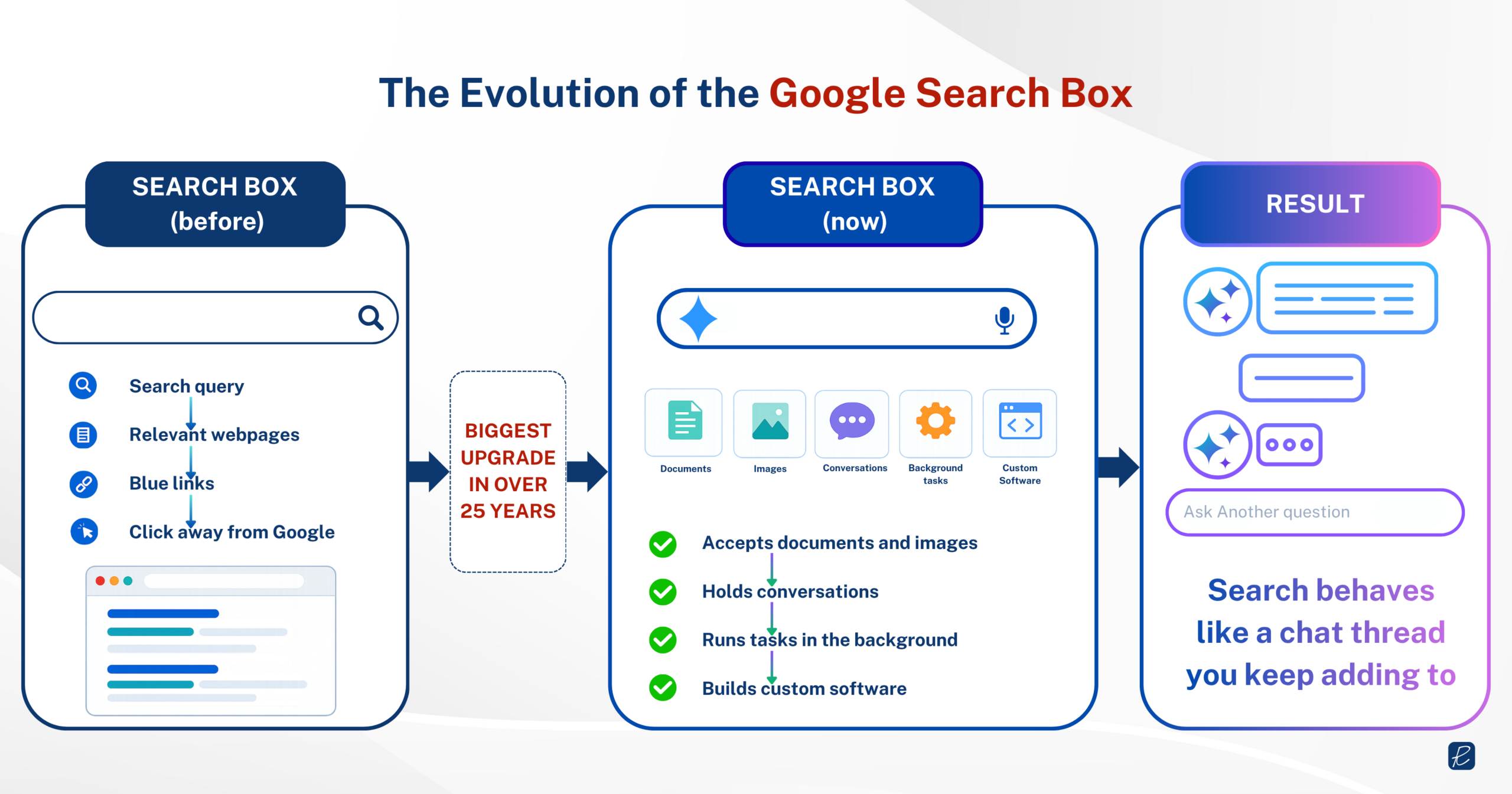
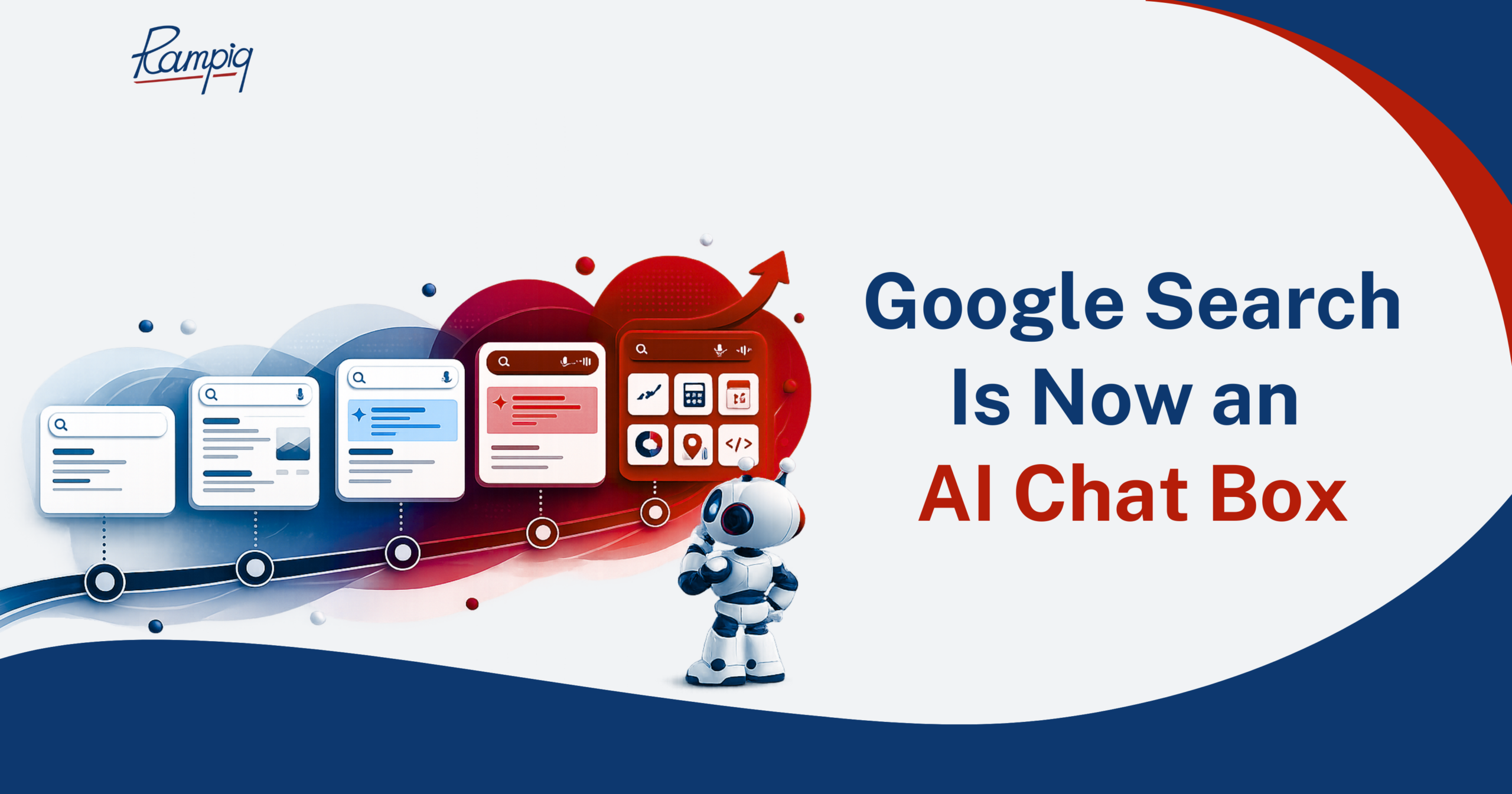
Google reported that AI Mode passed a billion monthly users, with queries doubling every quarter since launch, and Search queries hitting an all-time high last quarter. AI Mode and AI Overviews have basically collapsed into one continuous experience. From the “ask another question” box below the overview, users can follow up on answers to their initial questions with context carried over. AI answers are also in the People Also Ask section. Every path in Search can now offer loops back into a conversation rather than out to a link.
Search now behaves like a chat thread you keep adding to. The interface is built to keep you talking to Google instead of leaving for the rest of the web.
The bottom line: every search path now loops back into a conversation with Google instead of out to your site.
Search agents that work while you’re gone
Google also introduced AI search agents. You give one a standing job, and it runs continuously in the background around the clock, surfacing results as conditions change with no one re-running a search. They can act on what they find, too, booking demos or reaching out to vendors directly.

This automates B2B buyers’ evaluation. A buyer might use an agent to:
- Watch a software category and flag any vendor that meets a set requirement
- Keep a shortlist of competitors under watch for pricing changes
- Monitor for fresh analyst coverage
The concern for brands is there’s no query to rank for and no click to measure.
If a competitor fits the buyer’s criteria at the moment the agent checks, and you aren’t visible, you never make the shortlist, and no one typed a thing for you to appear in.
Generative UI and mini apps
Going beyond just ‘search’, using Gemini 3.5 Flash and Google’s Antigravity coding system, Search can now build and render custom interfaces on the fly to answer certain queries.
Ask it to compare two analytics platforms for a 50-person team, and it can build a live comparison table, or a pricing calculator you drop your own numbers into, right in the results. No webpage is behind that answer; Google generated it as working software, built solely for the searcher’s question.
The bigger version of this is what Google calls ‘mini apps’. These are for experiences you keep returning to, for example, evaluating vendors, Search can build a custom dashboard with live data and updates as things move. Mini apps start reaching AI Pro and Ultra subscribers soon.
When Google builds the answer itself, ranking a page stops being an objective because none is involved at all. Search goes after the raw information behind the answer and pulls it from sources only it can read.
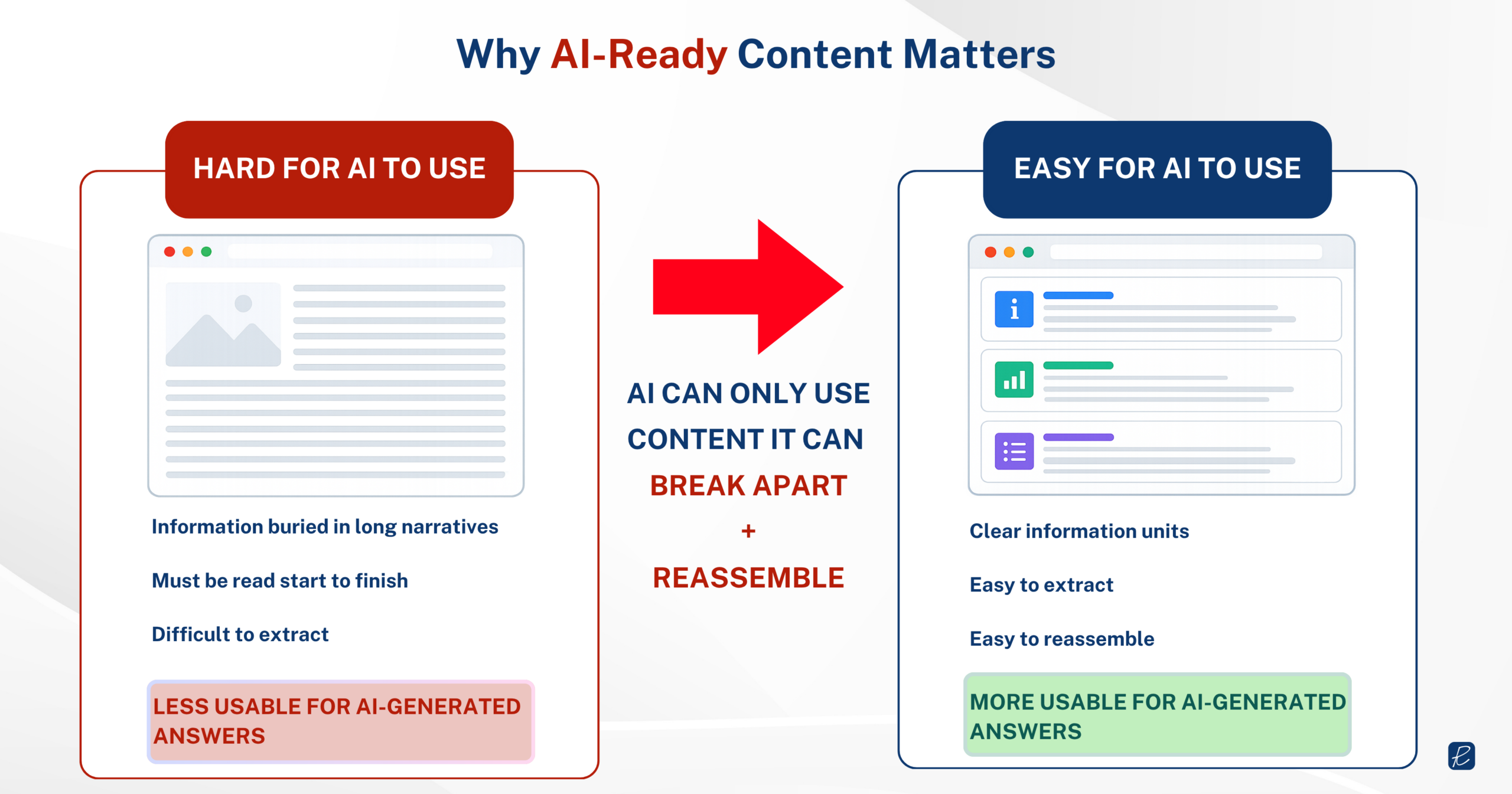
A model can only use content it can break apart and reassemble. A page that only makes sense read start to finish gives it nothing to grab. Structuring content for that is its own discipline, and we broke it down in how to build AI-ready content.
Personal Intelligence, now free and nearly everywhere
Personal Intelligence rolled out to nearly 200 countries and 98 languages with no subscription. Connect your Gmail, Photos, and soon Calendar, and Search blends your own context into its answers. It’s opt-in, and Google stressed that you decide what gets linked.
The effect from everything else holds here too, which is that the more of your life AI Mode has access to, the more useful it becomes, and the more reason to stay inside it. This takes personalization to a whole new level. And it reinforces the need to completely know your ICPs and clearly communicate product information, use cases, targets, and their pain points.
The key takeaway here is that richer personalization raises the bar on knowing your ICPs and stating product info, use cases, and pain points plainly.
Agentic shopping moves into the box too
In the May 2026 Google I/O, they detailed a Universal Cart that follows users across Search, Gemini, YouTube, and Gmail. It’s built on UCP (Universal Commerce Protocol) for agent commerce and AP2 for agent payments. These are protocols that Amazon, Microsoft, Meta, Stripe, Salesforce, and others have already backed.
Google pulls checkout itself, and the agentic version is already expanding to markets like the UK. Like everywhere else in the keynote, the point for B2B marketers is that the buying journey, not just the research, now runs inside Google from start to finish. For most B2B, this is a watch-item rather than a problem for today, but if you sell self-serve or transactional, track this closely.
At the time of writing this post, agentic shopping remains a watch-item for most B2B, but track it closely if you sell self-serve or transactional.
Google Search’s real shift is from search engine to answer engine
The search box design changed, and so has the business model. Google has shifted from sending you to the best answer to being the place the answer lives. Take a step back from the feature list, and you see Google’s intention through all of it. Google is in the attention business, and they have stopped being only a middleman connecting searchers to webpages.
For 25 years, Google’s model was transactional… give information, send them onward, and monetize the trip. These I/O announcements solidify their transformation from search engine to ‘answer engine’. The agents that work in the background, Search writing software on demand, and the universal cart are all efforts to keep people inside Google longer.
What this means if you’re a B2B brand
Three things change for brands at once:
- Ranking number one matters less. When fewer people scroll to the links at all, visibility now means being in the answer and the option it recommends.
- The work is harder and different. Good SEO still gets you eligible to appear, but winning the spot inside the answer leans on factors traditional SEO never weighed this heavily. Your site has to be optimized for AI search agents, not just human visitors.
- Measurement breaks. Background agents and in-answer resolution produce outcomes with no session or click to trace, so the metrics most teams rely on stop working. Tracking your brand and competitors in Google now takes a different set of metrics entirely.