AI search has replaced traditional discovery for B2B buyers
This is the single most consequential shift in B2B marketing right now. Even as at 2025, 94% of B2B buyers already reportedly used large language models to research solutions, according to 6sense’s 2025 Buyer Experience Report. Roughly half of all Google searches today include an AI Overview (HubSpot, 2026). Google’s AI Overviews appeared on roughly 48% of queries as of April 2026, reaching 2 billion monthly users.
Your content is no longer just competing for a search ranking. It is competing to be the source an AI system cites when a buyer asks about your category in ChatGPT, Perplexity, or Google AI Overviews.
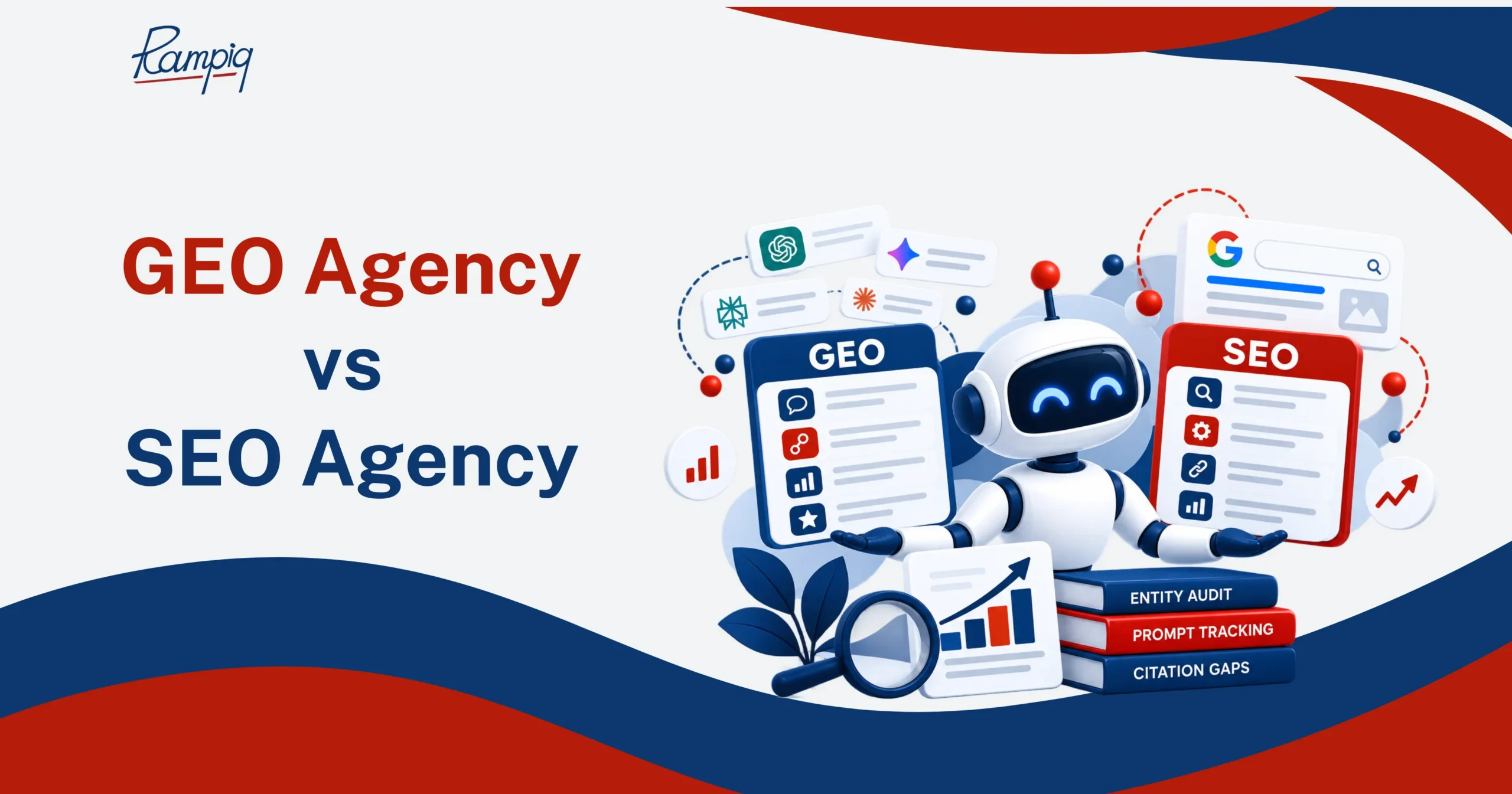
AI search requires a different content strategy. Traditional SEO optimizes pages for ranking. Generative Engine Optimization (GEO) optimizes content for AI visibility. At Rampiq, GEO is central to how we approach B2B content strategy. We have tested all major AI visibility trackers across client accounts over 90 days, and the gap between brands that optimize for AI search and those that don’t is already significant.
After helping 100+ B2B brands improve AI search visibility and tracking thousands of AI Overview rankings, one pattern is clear: brands optimizing for AI discovery are gaining visibility while competitors relying only on traditional SEO are losing buyer attention.
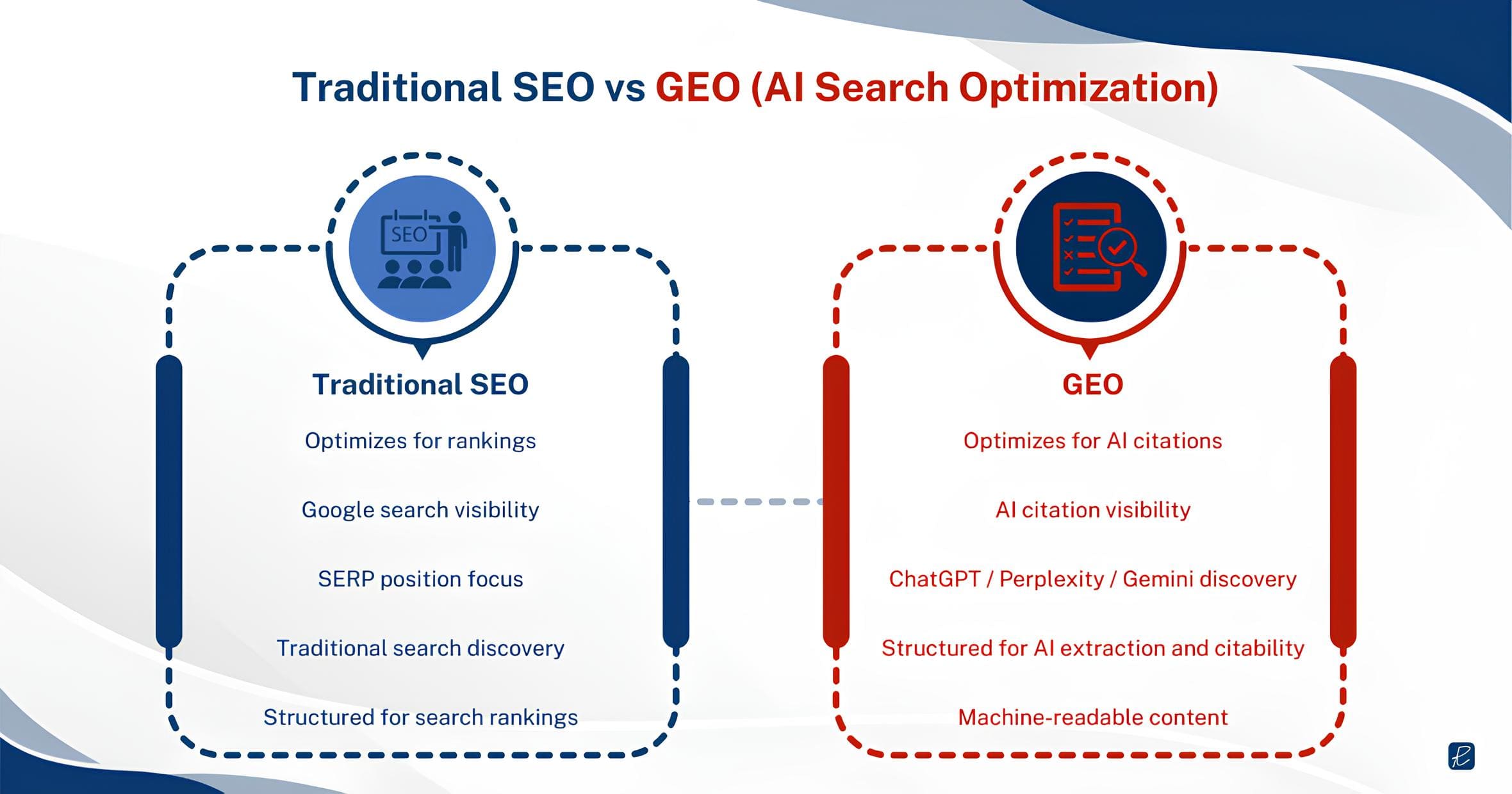
One common misconception is that ranking well in traditional Google search automatically means you appear in AI-generated answers. We have audited B2B SaaS brands with strong organic positions whose content never surfaced in ChatGPT or Perplexity for their core buying queries. In several instances, we found that content ranked #1 in Google but wasn’t picked up by AI tools. The reverse is also the case, where ChatGPT cites content that ranks deep in search pages.
One recent AI visibility engagement helped a B2B technology company grow from zero AI Overview visibility to 800+ AI-generated answer placements after restructuring content for AI extraction and citation.
Marketing, especially in B2B, is transforming quickly. AI is influencing organic discovery more and more, traditional search volume continues to decline, and search engines are giving more visibility to AI summaries. Brands that have not adapted their content for AI-powered discovery are building on a channel that is actively shrinking.
Across AI visibility audits, we increasingly see B2B brands with strong SEO foundations losing discovery share because AI systems recommend competitors directly inside generated answers.
AI agents are taking over marketing operations
Unlike traditional automation tools that wait for instructions, AI agents receive objectives and figure out how to achieve them. In B2B marketing, these can include planning actions, executing across systems, and adjusting based on results.
Over half of senior executives say their companies are already using AI agents, according to Talkwalker. Amazon Ads reported in early 2026 that marketing teams are deploying specialized agents that coordinate across the full campaign lifecycle, from strategic planning to creative optimization to performance reporting.
The use cases in B2B are expanding fast. Agents now handle real-time paid media budget reallocation across channels, lead scoring and routing based on live behavioral signals rather than static rules, multi-step nurture sequences that adapt to prospect engagement patterns, campaign performance analysis that surfaces insights without a human pulling reports, and customer support through advanced chatbots (60% of B2B companies already use chatbot solutions). Sales forecasting powered by AI has reached 79% accuracy compared to 51% with traditional methods.
What makes agents different from the AI tools most teams already use is coordination. A content AI writes a draft. An agent plans what content to produce, for which audience segment, distributes it across channels, monitors performance, and adjusts the next round based on what worked. Multiple agents can specialize and collaborate: one handles data analysis, another runs personalization, a third manages channel selection.
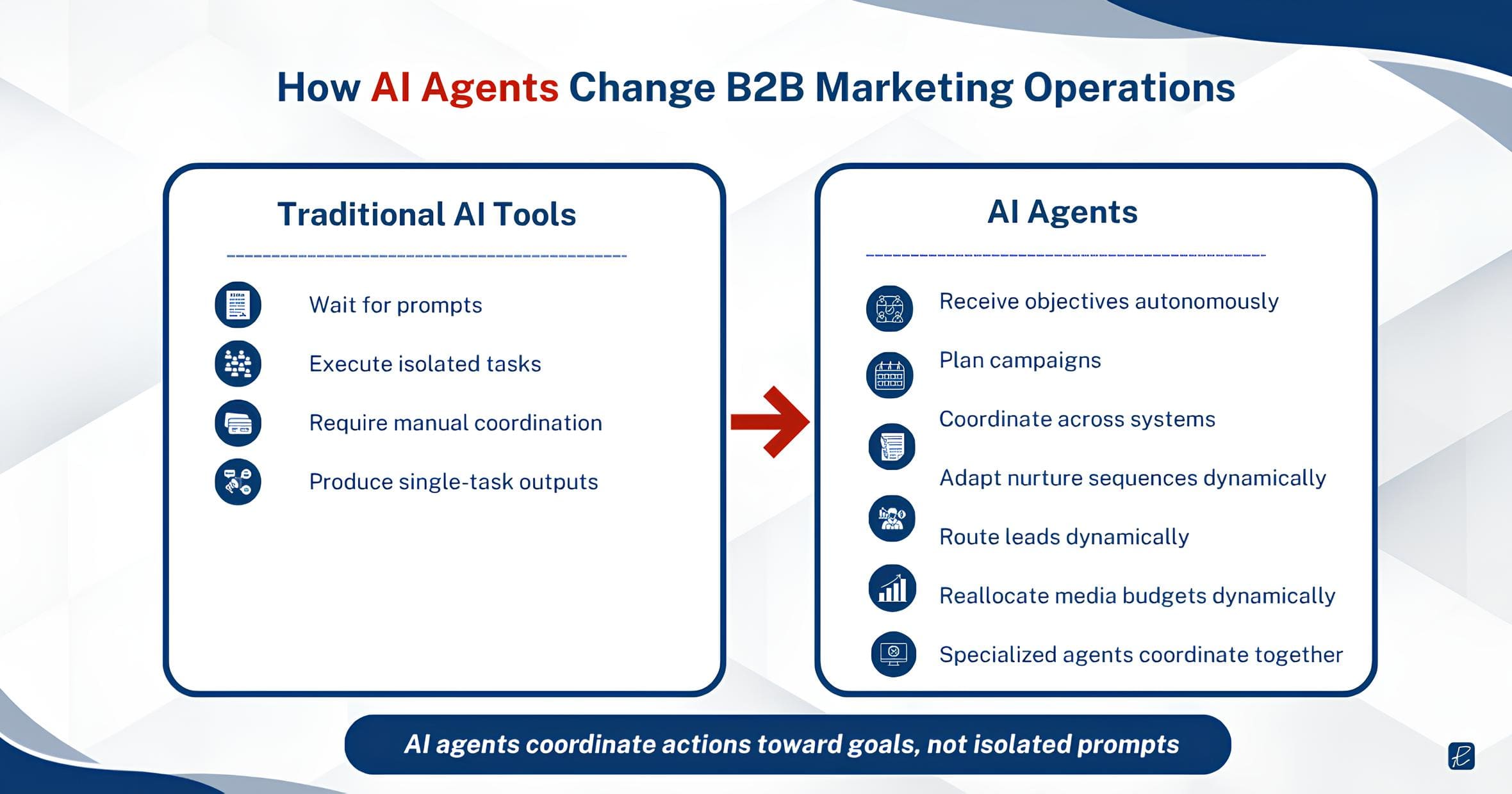
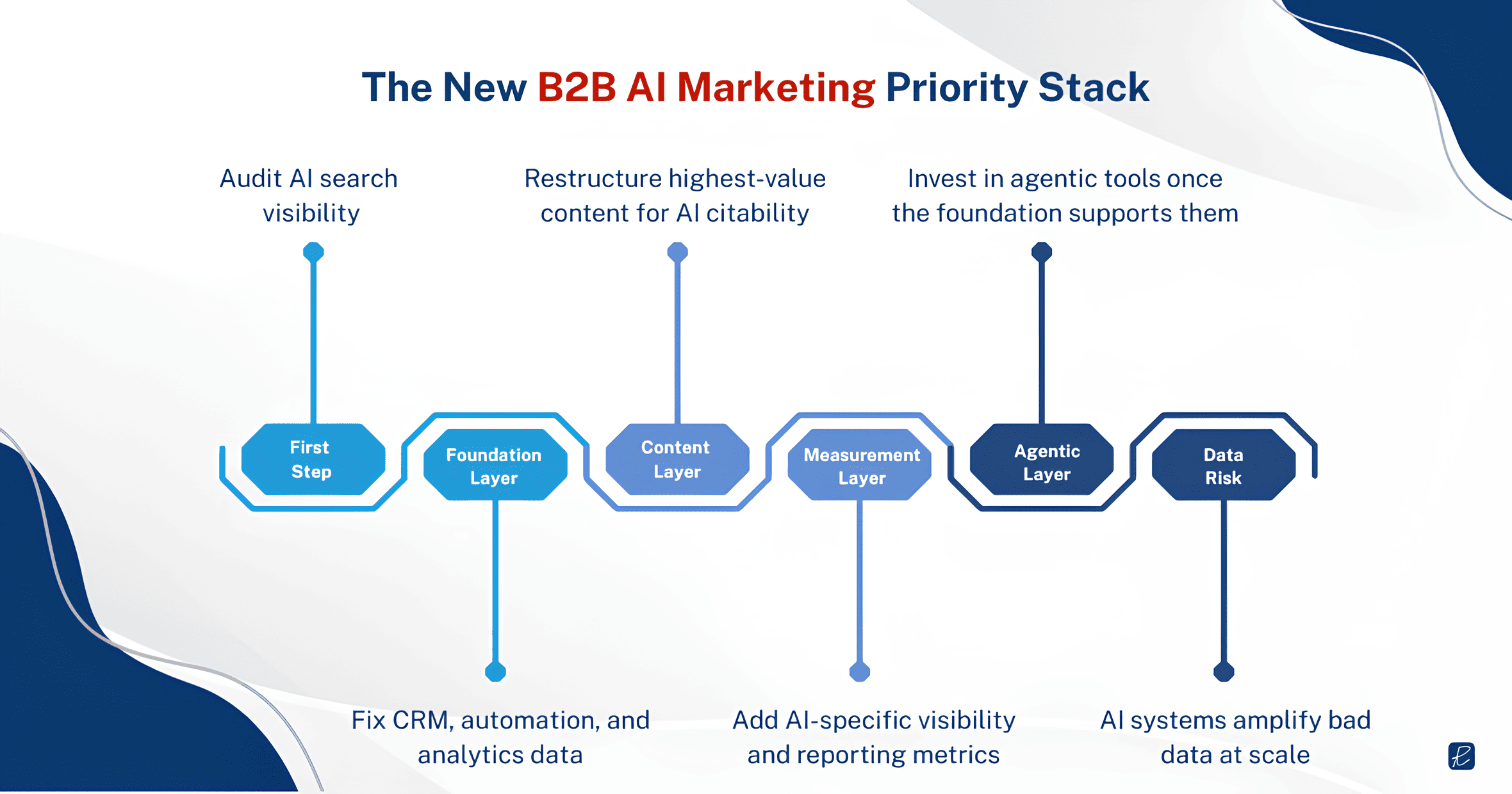
The risk is real, though. 30% of generative AI projects are expected to be discontinued after pilot stages, mainly due to data quality issues. AI agents amplify whatever data they operate on. B2B contact data decays at roughly 2.1% per month, which means a significant share of any marketing database becomes unreliable within a year. An agent optimizing on bad data does not produce bad results slowly. It produces confident, wrong results at speed. Fix the data layer first.
Personalization is shifting from individuals to buying groups
Individual-level personalization in B2B contexts can backfire as purchasing involves committees of decision-makers. Research from Gartner shows that roughly 74% experiencing internal conflict during the process.
Personalizing an email sequence to a single champion does not help when three other stakeholders are forming different conclusions and raising objections the champion cannot answer.
In AI marketing, teams are shifting to buying-group orchestration. Buying-group personalization improves consensus by approximately 20%, per Gartner’s analysis. McKinsey’s research found that companies excelling at personalization generate 40% more revenue than average performers.
This requires clean account-level data and a content library segmented by stakeholder role. Most B2B teams do not have this infrastructure yet, which is exactly why building it now creates a compounding advantage.
AI content production has hit a ceiling without measurement
94% of marketers plan to use AI for content creation in 2026. The percentage who don’t use AI for blog production dropped from 65% to 5% in two years. Content production is no longer the bottleneck.
However, only 19% of content marketing teams track AI-specific KPIs, per industry benchmarking data. Teams produce more content with AI and have no framework for evaluating whether that content performs differently than what they produced before.
The Content Marketing Institute’s 2026 B2B research (1,015 marketers surveyed) captured this well: the B2B teams winning right now are “building stronger muscles in marketing fundamentals, then letting AI breathe more creative life into those efforts.” The teams losing are churning out more AI-generated content without checking whether any of it drives results.
For B2B brands, the measurement gap extends to AI search. If you cannot track whether your content appears in AI-generated answers, you are missing a growing share of buyer discovery entirely. At Rampiq, tracking AI citations and visibility across LLMs is a core part of how we measure content performance for clients.
Across thousands of tracked AI-generated answers, we consistently see visibility patterns emerge months before they become visible in traditional traffic analytics.
This is why AI visibility audits have become an important first step for B2B marketing teams evaluating how AI platforms influence pipeline and vendor discovery.
Websites’ agent-friendliness will become a visibility factor
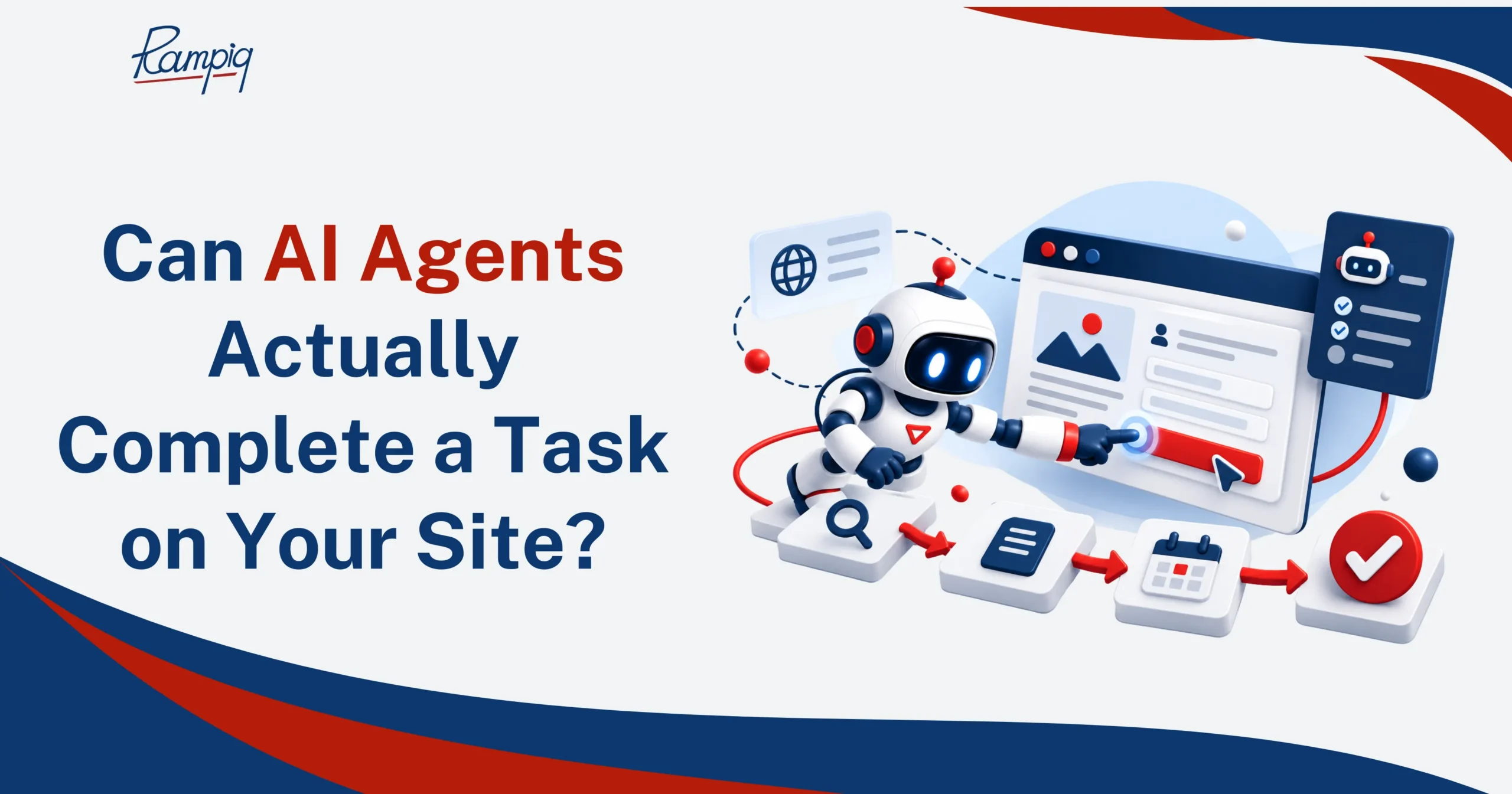
Just as mobile responsiveness became a Google ranking signal, the ability of AI agents to read and interpret your site will become a factor in AI search visibility.
B2B brands that structure their sites with clear schema markups, machine-readable product information, well-defined entities, easily accessible content, and programmatic access points will be more visible to AI systems than those optimized solely for human browsing. This is already happening in e-commerce.
From our experience working across AI visibility programs for B2B technology companies, structured entity signals and machine-readable content already influence how AI systems interpret and recommend brands.
Agent-friendliness connects directly to GEO. Content structured for AI extraction today will also be the content that AI agents can most easily reference, recommend, and act on tomorrow. If you are evaluating whether your brand needs specialized AI search support, this is the trajectory worth planning for.