Google sends far more traffic than ChatGPT
The comparison isn’t close. ChatGPT’s referral traffic is small and concentrated: more than 30% of it goes to just 10 domains, with Google itself taking 21.6%, per Semrush’s clickstream study. In an analysis of 973 ecommerce sites, ChatGPT accounted for roughly 0.2% of sessions, around 200 times less than Google organic.
For most sites, ChatGPT referrals won’t approach Google’s numbers soon. The trajectory is the part worth watching: ChatGPT referral traffic grew 206% year over year into early 2026. Small base, steep curve, so treating today’s tiny share as permanent misreads where it’s going. And Google’s own side of the comparison isn’t as stable as the session count makes it look.
Google Search traffic is shrinking
While ChatGPT sessions keep growing, Google is sending less and less traffic to websites. When an AI Overview appears, only 8% of users click a traditional result, versus 15% when there’s no AI summary, per Pew Research Center’s analysis of nearly 69,000 searches. AI Overviews reached roughly half of all Google queries by early 2026, and in B2B technology the rate runs higher still.
Add AI Mode and the other SERP features, and Google’s lead over ChatGPT looks far less durable than the session count suggests. Google itself now frames Search as AI Search through and through.
So the real comparison isn’t ChatGPT versus Google. It’s AI answers, wherever they sit, against the open web of links you used to rank in. Both platforms push traffic the same way: toward the answer, away from the click.
ChatGPT visitors arrive more qualified than Google searchers
A ChatGPT visitor and a Google visitor sit at different points in the journey. By the time someone clicks through a ChatGPT answer, they have usually done a round of research already and know more specifically what they want, which changes the nature of the lead. Google searchers carry buying intent too, but ChatGPT-referred visitors more often arrive to act rather than to browse.
For considered B2B purchases, independent analyses have repeatedly found AI-referred visitors converting above organic, since pre-qualification matters most when the decision is complex and research-heavy. For impulse retail this trend reverses: A 973-site ecommerce study reported by Search Engine Land found ChatGPT converting below organic search, email, and affiliate. The quality premium is real for the kind of purchase your buyers make and largely absent for a quick add-to-cart.
In the B2B accounts we monitor, ChatGPT sends a fraction of Google’s traffic, but those visits skew toward high-intent pages like pricing and comparisons, which lines up with what the broader studies show.
ChatGPT and Google are stages of the same buyer journey
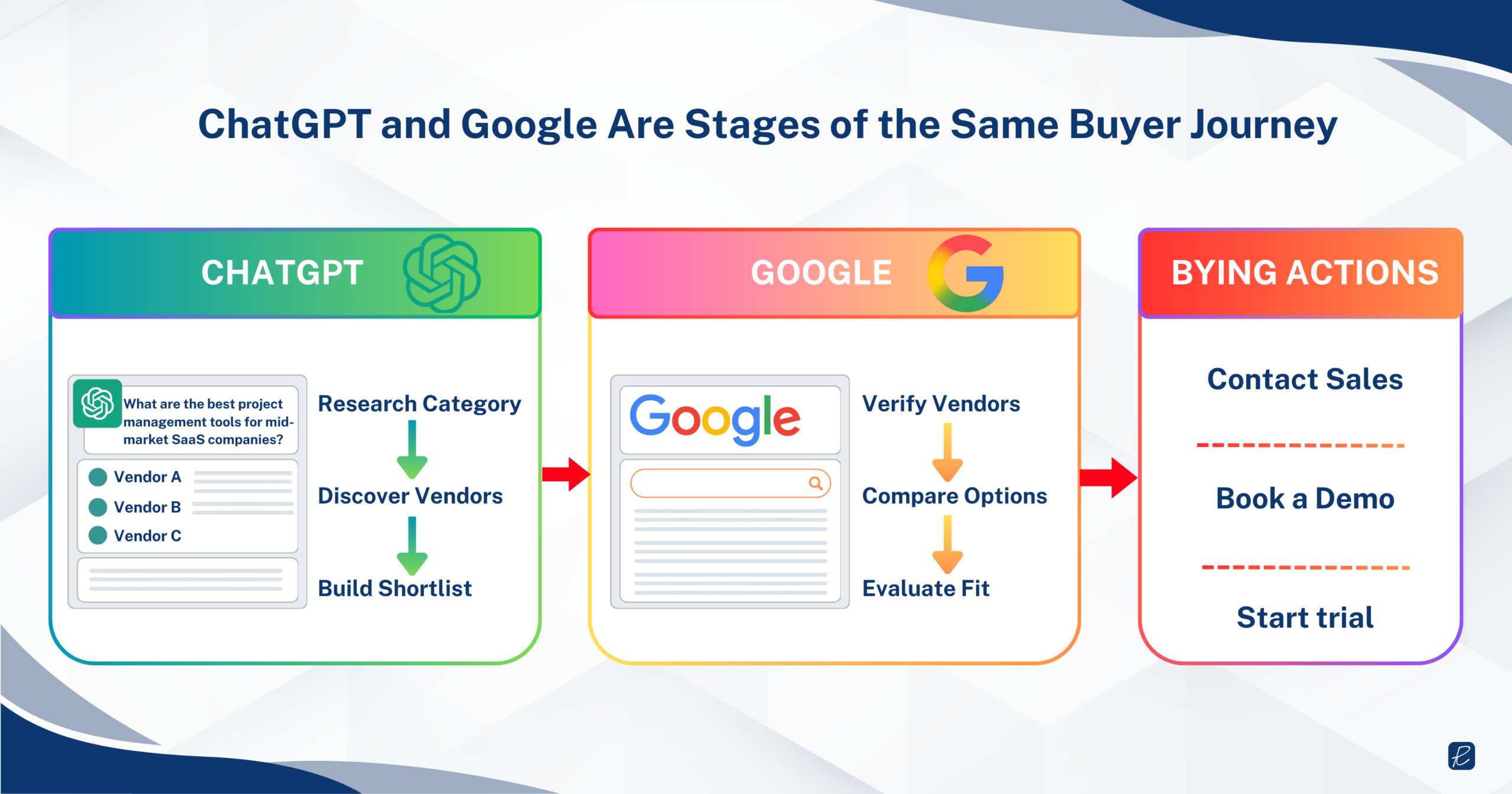
The ChatGPT vs Google question isn’t really a contest because the two mostly aren’t competing for clicks. 21.6% of all ChatGPT outbound clicks go straight to Google. The common path for such user journeys is: a buyer researches a category with the AI, leaves with names and angles, then Googles the shortlist to verify and take action.
A brand asking which source “wins” is misreading its own funnel. ChatGPT shapes a lot of the consideration set that a later Google search confirms, so losing the first step removes you from the second. Plan for them as two stages of one journey, not two rival channels.
Why your analytics undercounts ChatGPT’s impact on leads
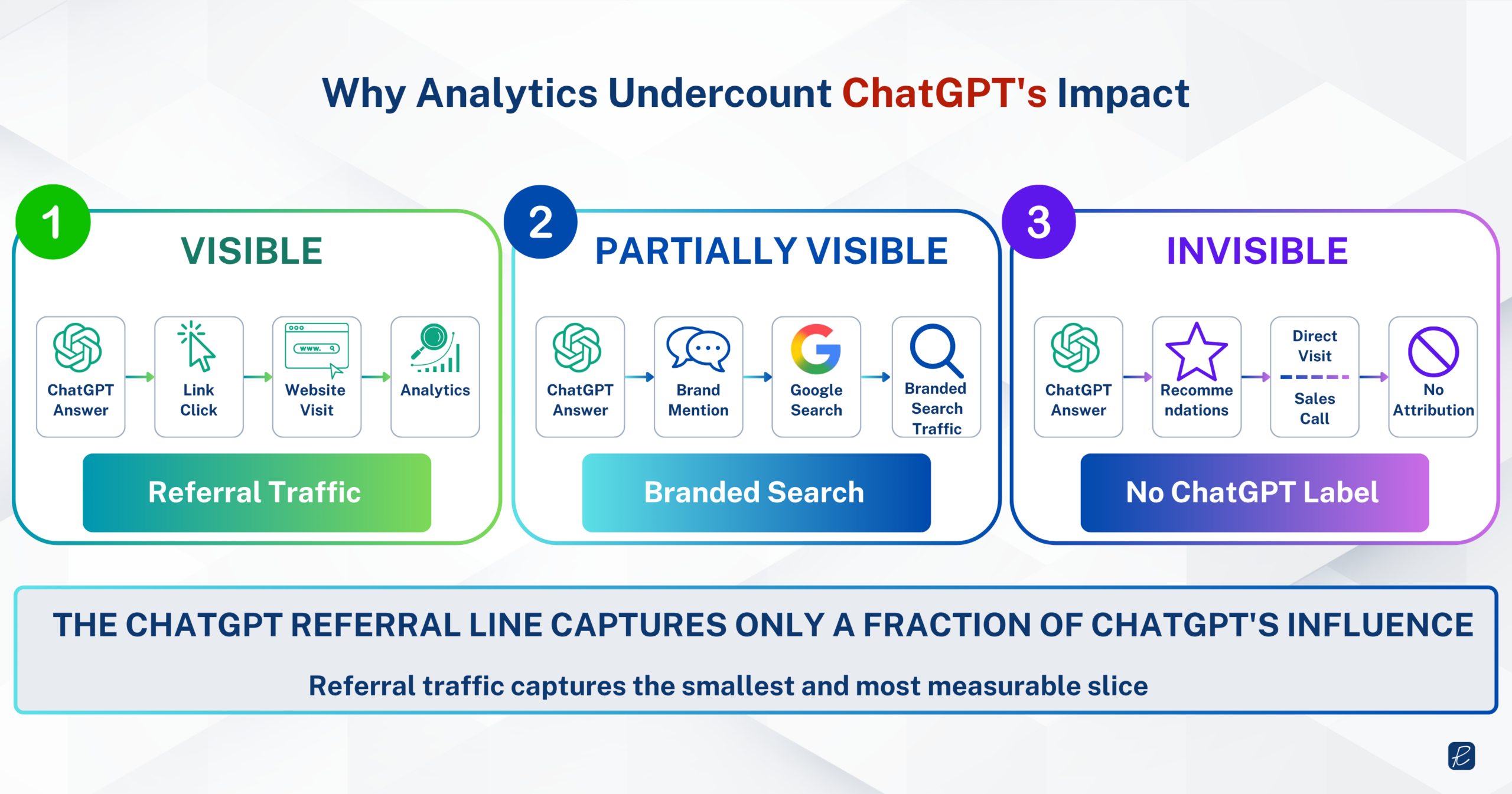
The ChatGPT referral line in your analytics counts only the visits where someone clicked a link inside an answer, and that’s a fraction of what ChatGPT does. When an LLM names your brand and the buyer later searches your name or types your URL directly, that conversion lands in branded search or direct traffic. When ChatGPT recommends you and the buyer reaches a sales call already convinced, no session gets recorded at all.
Google rankings don’t fill the gap, since what ranks on Google and what ChatGPT cites overlap only loosely, and Search Console won’t report whether ChatGPT recommends you. The traffic number you’d weigh against Google captures the smallest and most measurable slice of ChatGPT’s real influence.
How to measure ChatGPT’s real value as a lead source
Judged solely on totals, ChatGPT looks minor and will for a while, since both its sessions and its raw conversions are typically smaller than Google’s. Rates and trends describe its value better than totals do. The metric that matters is conversion rate by source; watching it month over month shows where the channel is heading as AI adoption grows. Moving that rate on purpose, rather than waiting for it, is what a structured AI visibility program is for.
The harder part to measure is the influence that never carries a ChatGPT label or UTM. A recommendation often surfaces later as branded search, direct traffic, a “how did you hear about us” answer, or a sales call that opens warmer than expected, especially across long B2B cycles. Track those signals at the account level rather than the contact level, since B2B buying committees move as a group.
Doing this properly means tracking share of voice, sentiment, and AI citations alongside the new visibility metrics that rank tracking was never built to capture.