AI visibility and GEO programs cost $1,500 to $5,000 a month for a startup, $5,000 to $15,000 for a mid-market B2B SaaS company, and $15,000 to $50,000+ for an enterprise, according to TripleDart’s 2026 GEO budget guide.
The number on the proposal matters less than what each dollar buys.
Quick answer: Company stage sets the monthly retainer band. A one-time audit sits outside that fee as a fixed price. Within a band, four cost levers set the number: prompts tracked, content shipped, technical work needed, and authority building the category demands.
Your SEO retainer may still be doing its job. It just wasn’t priced to check whether ChatGPT, Perplexity or Google’s AI Overviews name you when a buyer asks.
Retainer, project, or audit: the three ways GEO programs get priced
GEO programs get sold in three shapes. Most buyers end up paying for two of them: an audit first, then a retainer.
Model
What it is
Typical price
What it buys
AI visibility audit
A bounded diagnostic: your current citation and visibility baseline plus a gap analysis
$2,000–$5,000 one-time
A baseline and a prioritized fix list
Project
A one-time build: site restructure, migration recovery, schema overhaul
$5,000–$50,000 per project
A finished technical or content asset
Retainer
An ongoing monthly fee for prompt and citation tracking plus content production
$3,000–$8,000/mo in a foundations phase, $6,000–$20,000/mo at scale
Continuous monitoring, content and reporting
Audit and retainer figures: TripleDart. Project range: WebFX’s GEO pricing breakdown (May 2026). Both sell GEO, so read the ranges as vendor estimates.
An audit tells you what’s broken. It doesn’t fix anything, and it goes stale as soon as the AI engines refresh their sources.
The retainer is where results come from. AI answers shift month to month. In Rampiq’s Case IQ engagement, the audit led into a monthly optimization cadence with the in-house team. The client reached 850+ keywords ranking inside AI Overviews (one client, recovering from a site migration).
What actually drives the price
Please stop judging a GEO quote by its total alone. Four levers set the cost. Each one maps to a deliverable you can check.
Prompt and fan-out coverage. Every buyer prompt gets tracked, plus the sub-queries the AI engine fans it out into. Tooling runs $50–$200 a month at entry level, $500–$2,000 mid-tier, and $3,000–$6,000+ for enterprise setups with API access, per TripleDart. More products and ICPs mean more prompts, and a higher tier of AI visibility trackers.
Content volume. AI engines cite pages, so someone has to write or rework them. Writer and editor time costs $300–$1,500 per page, depending on depth. Content takes 30% to 40% of a GEO budget (TripleDart).
Structured-data and entity work. Schema, llms.txt, crawlability and entity categorisation are mostly front-loaded: $2,000–$8,000 for initial audit and implementation, or $500–$2,000 for a startup’s schema and llms.txt pass. After that it’s light maintenance.
Authority building. Engines lean on third-party sources, so crowded categories need digital PR. A GEO-focused PR retainer adds $2,000–$8,000 a month. Lever 3 and 4 figures are also TripleDart’s.
Citation monitoring cadence rides on lever 1. Weekly snapshots across four engines cost more tool spend and analyst time than a monthly check on one.
Typical monthly ranges by company stage
Start with the number you already know. Ahrefs’ survey of 439 SEO providers (updated August 2024) puts the average agency SEO retainer at $3,209 a month. The most common bracket is $501–$1,000. That average assumes every provider charges the top of its pricing tier, so it overstates the typical fee.
GEO ranges by stage sit above that anchor once you leave the startup tier:
Company stage
Monthly GEO range
Compared with the $3,209 SEO anchor
Startup / seed
$1,500–$5,000
About 0.5x to 1.6x
Mid-market B2B SaaS
$5,000–$15,000
About 1.5x to 4.7x
Enterprise
$15,000–$50,000+
About 4.7x and up
WebFX’s agency range spans the same bounds.
If you already pay for SEO, the add-on route costs less. AOK Marketing’s six-month GEO benchmark puts GEO layered onto an existing SEO program at an extra $1,500–$3,000 a month for SMBs and $4,000–$6,000 for enterprise. The same benchmark prices a GEO audit at $2,000–$8,000.
None of the pricing pages we reviewed ties a tier to its deliverables. You can rebuild that mapping from the unit costs above. The table is our read of what each budget can physically hold.
Deliverable
Startup
Mid-market
Enterprise
Prompt and fan-out tracking
One product, one ICP prompt set, entry-level tool
Several products or ICPs, mid-tier tool
Per product, per region, enterprise tool with API
Citation monitoring
Monthly snapshot
Weekly or biweekly, more engines
Continuous, with custom dashboards
Content cadence
Up to about 6 pages a month from a $450–$2,000 content line
Steady new pages plus refreshes of existing ones
Multiple writers, refresh program, legal review
Technical and schema work
One-time pass, then maintenance
Foundations phase plus ongoing fixes
Ongoing across several sites or brands
Authority building
Usually none
Selective PR or placements
A dedicated PR retainer
Reporting
Monthly dashboard
Dashboard plus strategy calls
Pipeline attribution across the buying committee
The content row is plain arithmetic. Content takes 30% to 40% of the budget, and at $300 to $1,500 a page, a $450–$2,000 line buys up to about 6 pages.
Use the table backwards, too. If a $4,000 proposal promises enterprise-grade monitoring, a PR program and weekly content, something in it isn’t real.
How to sanity-check a GEO quote before you sign
Run five checks on any proposal before it reaches procurement:
Ask for the prompt list. A vendor who can’t name the prompts it will track can’t report on them. Without a list you’re buying random visibility, and random visibility ≠ revenue.
Divide the content line by the page count. Compare the result with the per-page range in the drivers section. Far below it means thin pages.
Find the one-time work. Schema and llms.txt are front-loaded. If they show up as a permanent monthly invoice line, ask what’s left to do in month seven.
Read the sample report. Rankings alone make it an SEO report. You want AI citations, AI referral traffic and how both connect to pipeline.
Match the term to the signal window. Rampiq’s programs typically show first meaningful signals within 60 to 90 days, and revenue-attributable traffic typically compounds between months 4 and 9. A one-month trial measures almost nothing.
Are AI tools recommending your competitors instead of you?
Understand how AI platforms describe your brand vs. your competitors and the exact steps to flip those results.
Is GEO priced as an SEO add-on or its own line item?
Both models exist. An add-on works when your SEO program already ships content and technical fixes the GEO work can reuse. A standalone line makes sense when nobody owns AI visibility today. Either way, ask for the GEO cost as its own invoice line so you can measure it.
How is an AI visibility audit priced versus a monthly program?
An audit is a fixed one-time fee, and a program is a monthly fee for the work that follows. Published vendor estimates for audits run from $2,000 to $8,000. Before you sign, check that the audit’s fix list is scoped so the program can start on it in month one.
What determines whether a B2B SaaS company needs a $2K/mo or $15K/mo program?
Scope does, mostly. Each extra product, ICP or region needs its own prompt set and content. A crowded category adds authority work, and weak technical foundations add front-loaded fixes. One product in a quiet niche with clean schema can run lean.
About the author
Liudmila Kiseleva
Liudmila is one of the best-in-class digital marketers and a data-driven, very hands-on agency owner. With top-level education and experience, Liudmila is a true expert when it comes to digital marketing strategies and execution.
One integrated growth partner or separate SEO, PPC, and GEO agencies? Compare costs, accountability, and pipeline measurement, and see when each model makes sense for your B2B business. Plus, what to check before choosing an agency.
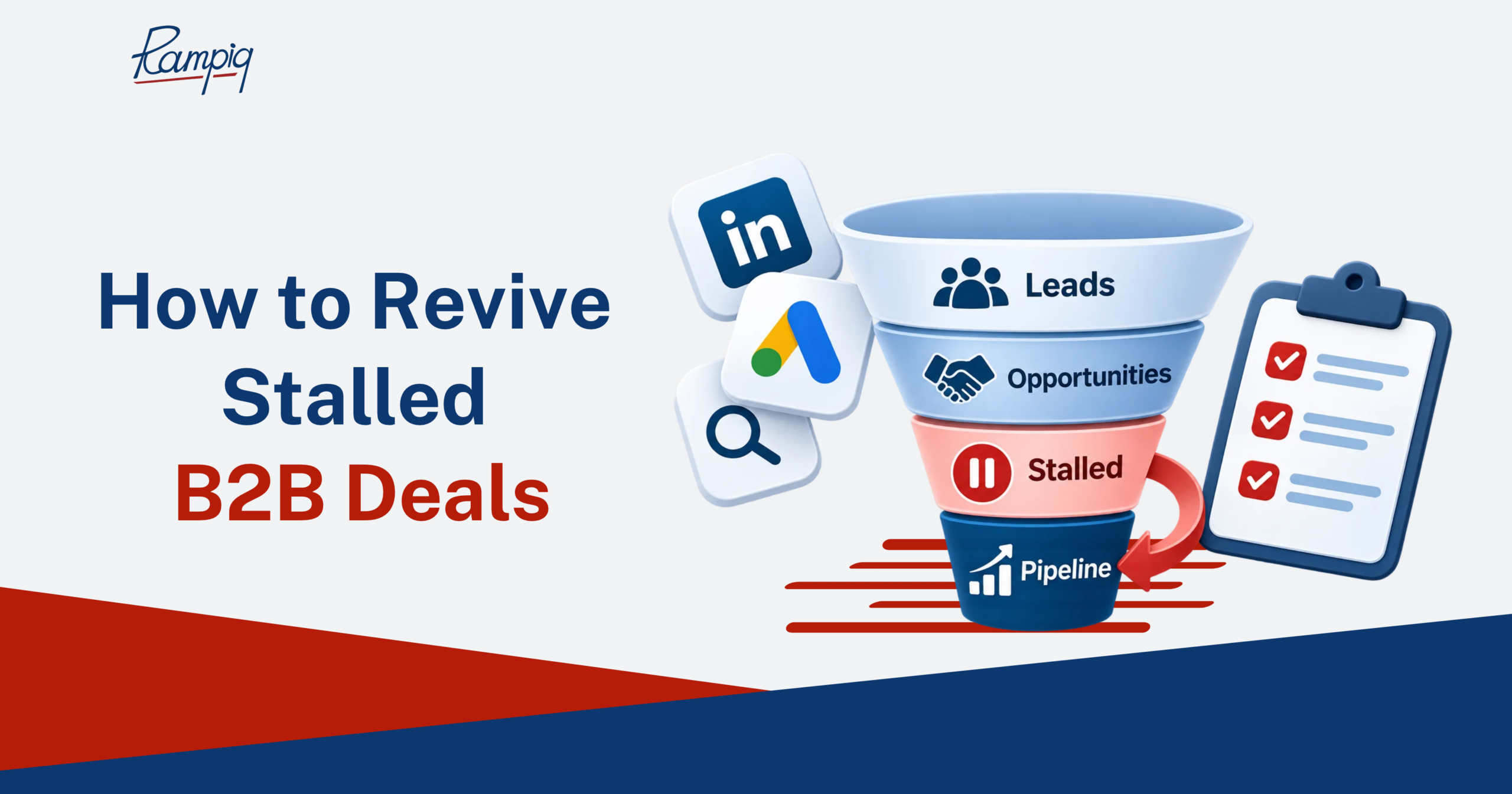
Stalled B2B deals aren't always lost opportunities. See how to identify why deals stop moving, re-engage decision-makers through targeted outreach and LinkedIn Ads, and bring qualified opportunities back into your sales pipeline.
Your existing blog archive could be a source of AI citations without adding more content. See how to audit old posts, decide what to merge, retire, or refresh, and restructure pages for AI Search while protecting existing SEO rankings.
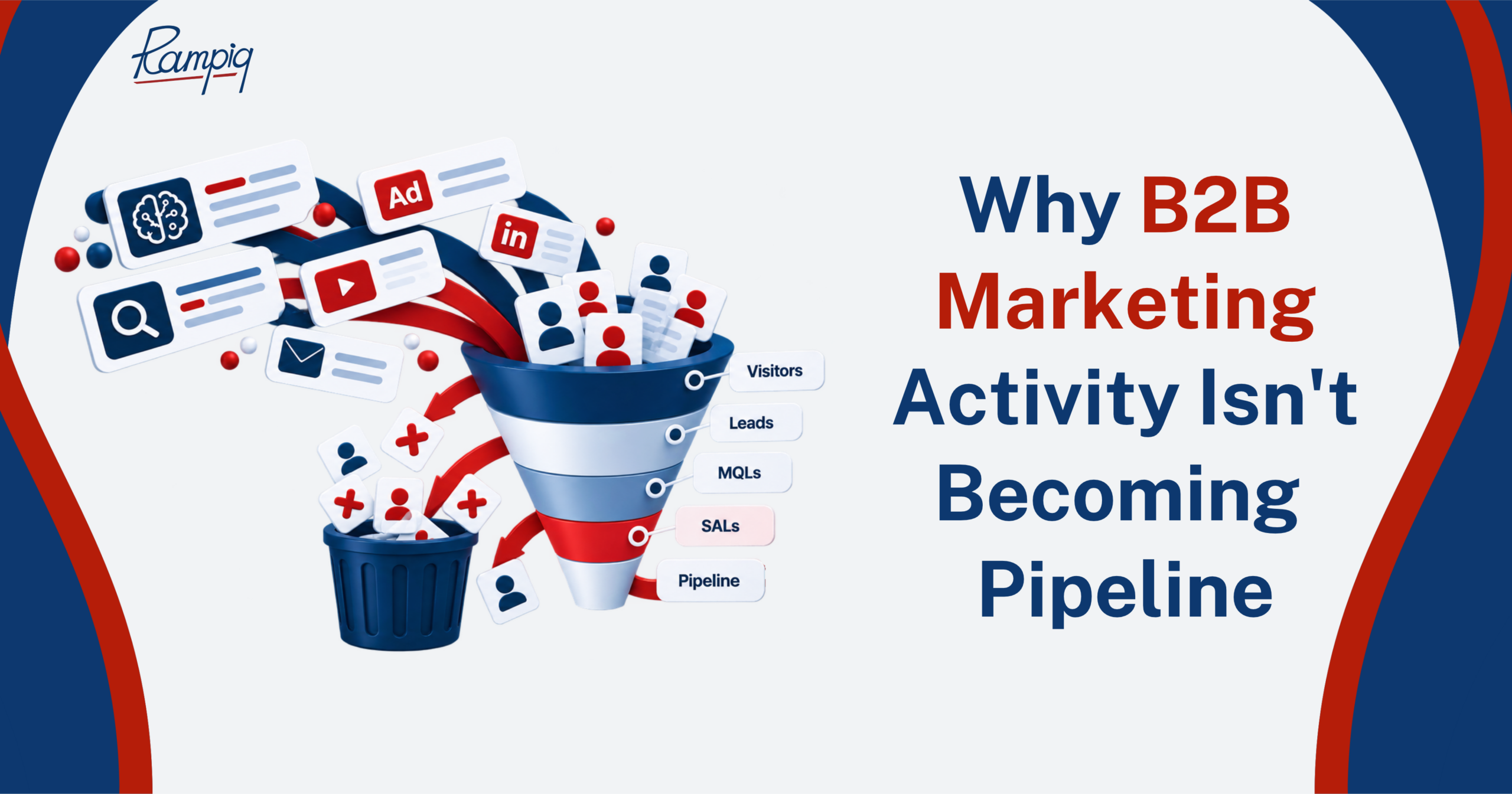
More traffic and leads don't always mean more qualified pipeline. See where B2B leads drop off, why marketing and sales qualification often don't align, and how to measure AI Search, SEO, and paid media against the right buyer stages.
Learn how to reach B2B buying committees by combining AI Search, SEO, and paid media. See how to target different decision-makers, coordinate channels across priority accounts, and avoid overlapping spend, with real client examples.
Learn how AI Search, SEO, and paid media work together to generate qualified B2B pipeline. See how to sequence these channels, measure their contribution to sales opportunities, and avoid common mistakes, with real client results.