You connect disconnected marketing channels to sales pipeline by fixing the process between them, and sales and marketing alignment comes down to four operating changes.
Quick answer: Standardize lead and opportunity fields in the CRM, tag every channel with the same campaign taxonomy, write a sales-marketing SLA with response times and recycle rules, then report sourced and influenced pipeline per channel every week.
The gap is common. In a survey of 200 US B2B technology buyers, 150 sellers and 150 marketers, half of technology organizations lacked a common set of funnel stages (Bain & Company, February 2022).
Each channel can be doing fine on its own terms. SEO grows traffic. Paid hits its cost-per-lead target. The AI Search program earns citations.
Pipeline still stalls, because nothing connects those wins to the opportunity stage in the CRM.
The leak usually happens at four breakpoints:
No shared lead definition. Paid counts a form fill as a lead, sales counts a booked meeting, and the two numbers drift apart.
No unified attribution. Each platform reports its own conversions, so the same opportunity gets claimed three times, or by nobody.
No handoff SLA. Leads sit unworked, get rejected without a reason, and disappear from both teams’ reports.
Channel-level vanity reporting. Teams defend impressions and MQL volume because nobody reports what each channel adds to pipeline.
Each step below closes one breakpoint, in this order. Definitions come first because attribution and reporting are meaningless without them.
Step 1: Put every channel on one lead and pipeline definition
Start in the CRM. Write the rules into required fields so they’re still enforced after the first quarter.
Standardize these fields and make them mandatory for every inbound record, whatever channel it came from:
Lifecycle stage, with written entry criteria for each stage (lead, MQL, SQL, opportunity).
MQL criteria. The ICP fit and engagement threshold, the same for SEO, paid, events and AI referral traffic.
SQL criteria. What sales must confirm before accepting the lead: need, buying role, timing.
Original source and latest source, set automatically and never overwritten by hand.
Opportunity source, filled when the opportunity is created.
What is a Sales Qualified Lead (SQL)?
A Sales Qualified Lead is a lead that sales has reviewed and accepted as worth an active sales conversation, based on criteria both teams signed off on. If the criteria aren’t written down, every rep applies their own.
What is sourced vs. influenced pipeline?
Sourced pipeline is opportunity value a channel directly created: the first meaningful touch that brought the account in came from that channel. Influenced pipeline is opportunity value a channel touched before or during the deal while another channel got the sourcing credit.
Report both, separately. Adding them together double-counts deals and makes every channel look like it’s carrying the quarter.
Step 2: Stitch attribution across SEO, paid and AI Search into one view
Full-funnel attribution traces an opportunity back through every marketing touch on the contacts at that account, from first visit to closed deal. It happens in one system. For most B2B teams, that’s the CRM, fed by consistent campaign tags.
To stitch it together:
Use one UTM taxonomy for every paid, email and partner link: the same values for source, medium and campaign, documented in a shared sheet and owned by one person.
Pass UTM values into hidden form fields so they land on the contact record, then roll them up to the account and opportunity.
Map organic search and AI referral sources as their own channels instead of letting them fall into “direct” or “other.”
Review untagged opportunities monthly. A rising share of “unknown” source is the first sign the stitching broke.
If organic is the channel you can least explain to sales, an organic growth engine ties it to the same pipeline targets as paid.
Where AI Search breaks last-touch attribution
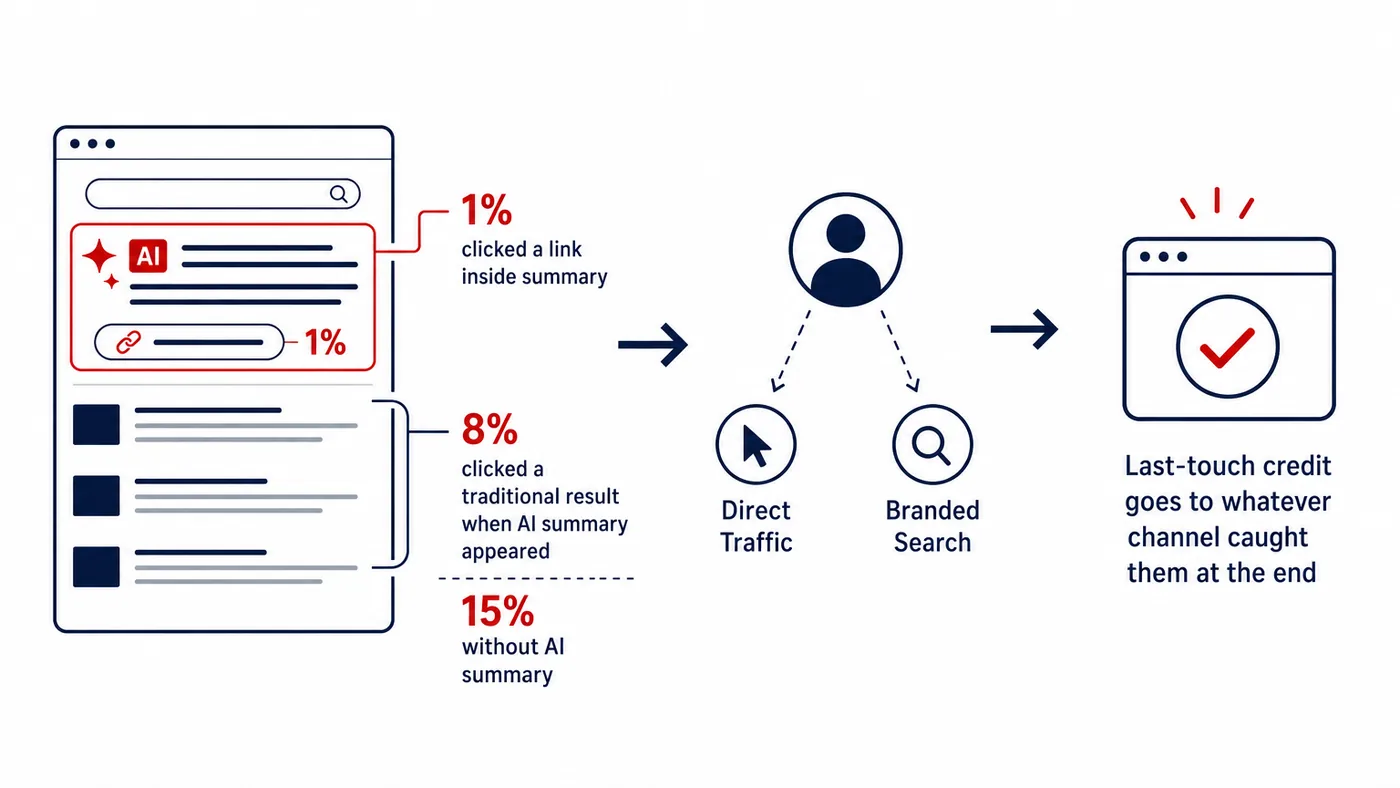
AI Search shapes the shortlist before anyone clicks. In a Pew Research Center study of 900 US adults (browsing data from March 2025), Google users clicked a traditional result in 8% of visits when an AI summary appeared, against 15% without one, and clicked a link inside the summary in 1% of visits (Pew Research Center, July 2025). Google disputed the study’s methodology.
The buyer who read your brand in an AI answer may arrive later as direct traffic or a branded search. Last-touch then gives the credit to whatever channel caught them at the end. Two fixes help: track AI referral traffic as a named source, and add a “How did you hear about us?” free-text field to demo forms. Rampiq tracks ChatGPT and Perplexity referral traffic in real-time client dashboards (Vertology.ai).
Step 3: Write the sales-marketing SLA that makes the handoff operational
A sales-marketing SLA (service-level agreement) is the documented contract for the handoff. It says which leads marketing sends, how fast sales responds, and what happens to leads sales won’t accept. It turns “we’re aligned” into rules someone can audit.
Put these terms in writing:
Lead criteria. The MQL and SQL definitions from Step 1, by reference.
Response window. How fast sales contacts a new MQL. Set it per lead type, since a demo request can’t wait as long as a content download.
Follow-up cadence. The number of attempts, and how long sales works a lead before it can be returned.
Rejection and recycle rules. Every rejected lead gets a reason code and goes back to nurture. It never goes to a dead status.
A weekly pipeline review with marketing in the room.
The recycle rules matter more than they look. In the same Bain survey, 59% of organizations didn’t append a reason when a lead was discontinued, 68% didn’t append the touchpoint history, and only 16% re-nurtured stalled leads within a month. Organizations in that survey that grew revenue 10% or more and gained 3 points of share over three years were 26% more likely to have marketing join pipeline reviews. Rejected leads with a reason code are also your best source for reviving stalled B2B deals later.
Step 4: Report pipeline contribution per channel, not clicks or MQLs
Your channel dashboards probably still work. They just report the wrong unit for a pipeline conversation: MQL volume ≠ pipeline.
Report these every week, by channel, from the CRM rather than from ad platforms:
Metric
What it shows
Owner
Sourced pipeline value
Opportunities the channel created
Marketing
Influenced pipeline value
Opportunities the channel touched
Marketing
MQL-to-SQL rate
Whether the channel brings ICP-fit leads
Marketing and sales
SQL-to-opportunity rate
Whether accepted leads turn into deals
Sales
SLA compliance
Share of MQLs contacted within the response window
Sales
Add lead-to-accepted-lead rate per channel if your CRM tracks sales acceptance. An SAP-solutions provider reported that PPC generated 40% of its total sales pipeline, with a 23% conversion rate from PPC leads to sales-accepted leads, after Rampiq restructured its LinkedIn and Google Ads campaigns (one self-reported result, Clutch review by the client’s Brand Manager).
For how SEO, paid and AI Search feed one motion once this reporting exists, see the integrated B2B growth motion.
When to bring in a partner vs. fix it in-house
Fix it in-house if you’ve got a RevOps or marketing ops owner with CRM admin rights and time to run the weekly review. The four steps run on ownership and the software you already have.
Bring in a partner when different agencies or teams run the channels and each reports its own numbers. The same goes if nobody owns the CRM fields, or you need the connection running within a quarter. If that’s your situation, work with our growth team: Rampiq works alongside in-house teams and connects channels, analytics and sales handoff as one program. If the gap is specifically paid and LinkedIn pipeline from accounts you already know, the Pipeline Activator program focuses on target accounts and stalled opportunities.
See Where Competitors Beat You in ChatGPT
Are AI tools recommending your competitors instead of you?
Understand how AI platforms describe your brand vs. your competitors and the exact steps to flip those results.
What is an integrated marketing strategy across channels?
An integrated marketing strategy runs every channel against the same ICP, pipeline definitions and reporting. Each channel’s job is then set by what it adds to qualified opportunities. Each channel keeps its own tactics under that shared definition of success.
Who should own sales and marketing alignment?
One named owner should hold the CRM definitions and the SLA, usually RevOps or marketing operations. Without a single owner, nobody updates the fields when criteria change. Sales and marketing leaders sign off on the rules; the owner enforces them.
How long before per-channel pipeline reporting is trustworthy?
Treat the first full quarter after the fields and SLA go live as a baseline, not a verdict. Opportunities created before the change won’t have complete source data. Compare channels once the new opportunities have had time to move through your sales cycle.
About the author
Liudmila Kiseleva
Liudmila is one of the best-in-class digital marketers and a data-driven, very hands-on agency owner. With top-level education and experience, Liudmila is a true expert when it comes to digital marketing strategies and execution.
Disconnected marketing channels can generate leads without contributing to qualified pipeline. See how to align CRM data, attribution, and sales handoffs across AI Search, SEO, and paid media, and measure each channel’s contribution to sales opportunities.
One integrated growth partner or separate SEO, PPC, and GEO agencies? Compare costs, accountability, and pipeline measurement, and see when each model makes sense for your B2B business. Plus, what to check before choosing an agency.
Stalled B2B deals aren't always lost opportunities. See how to identify why deals stop moving, re-engage decision-makers through targeted outreach and LinkedIn Ads, and bring qualified opportunities back into your sales pipeline.
Your existing blog archive could be a source of AI citations without adding more content. See how to audit old posts, decide what to merge, retire, or refresh, and restructure pages for AI Search while protecting existing SEO rankings.
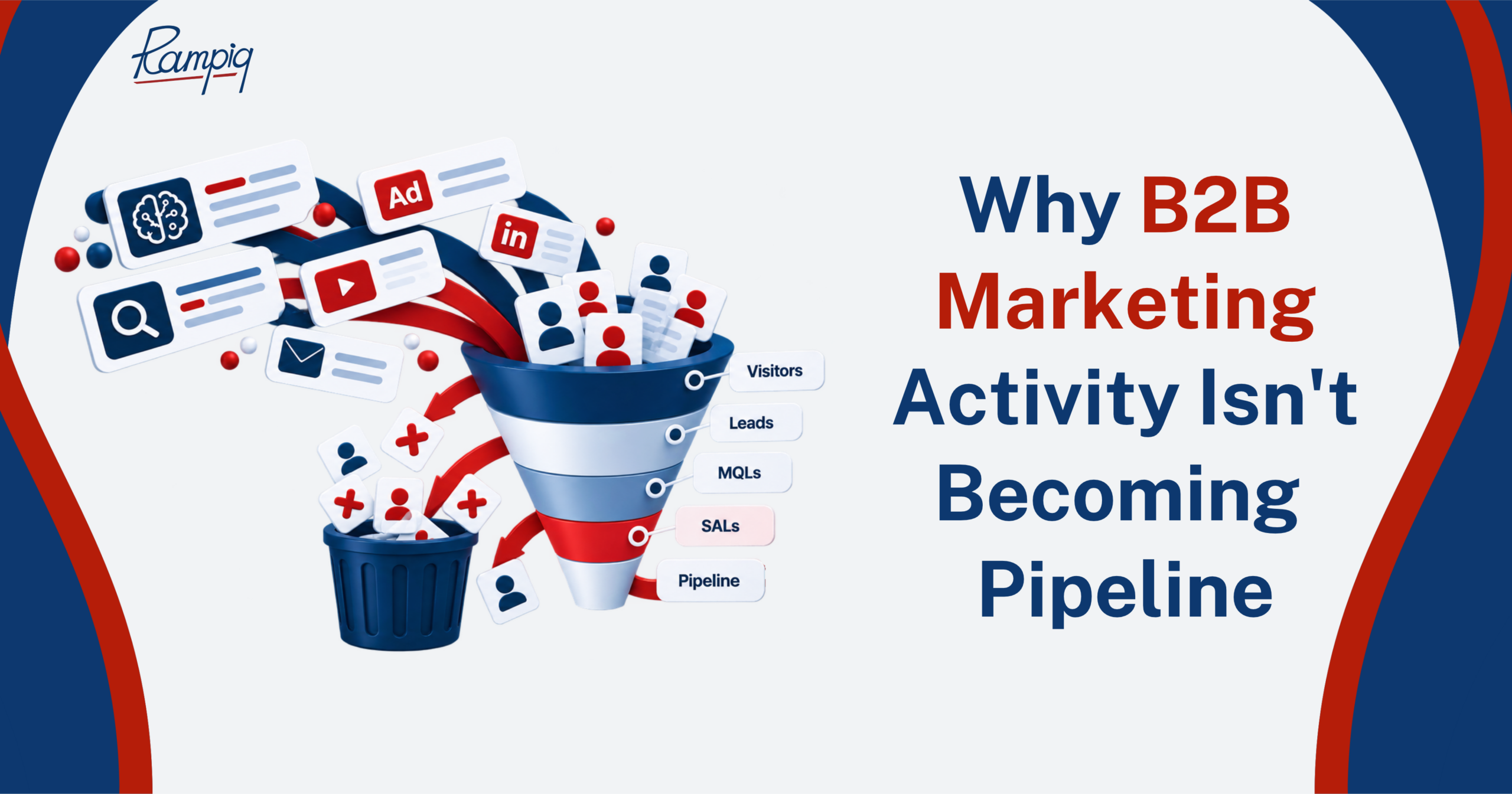
More traffic and leads don't always mean more qualified pipeline. See where B2B leads drop off, why marketing and sales qualification often don't align, and how to measure AI Search, SEO, and paid media against the right buyer stages.
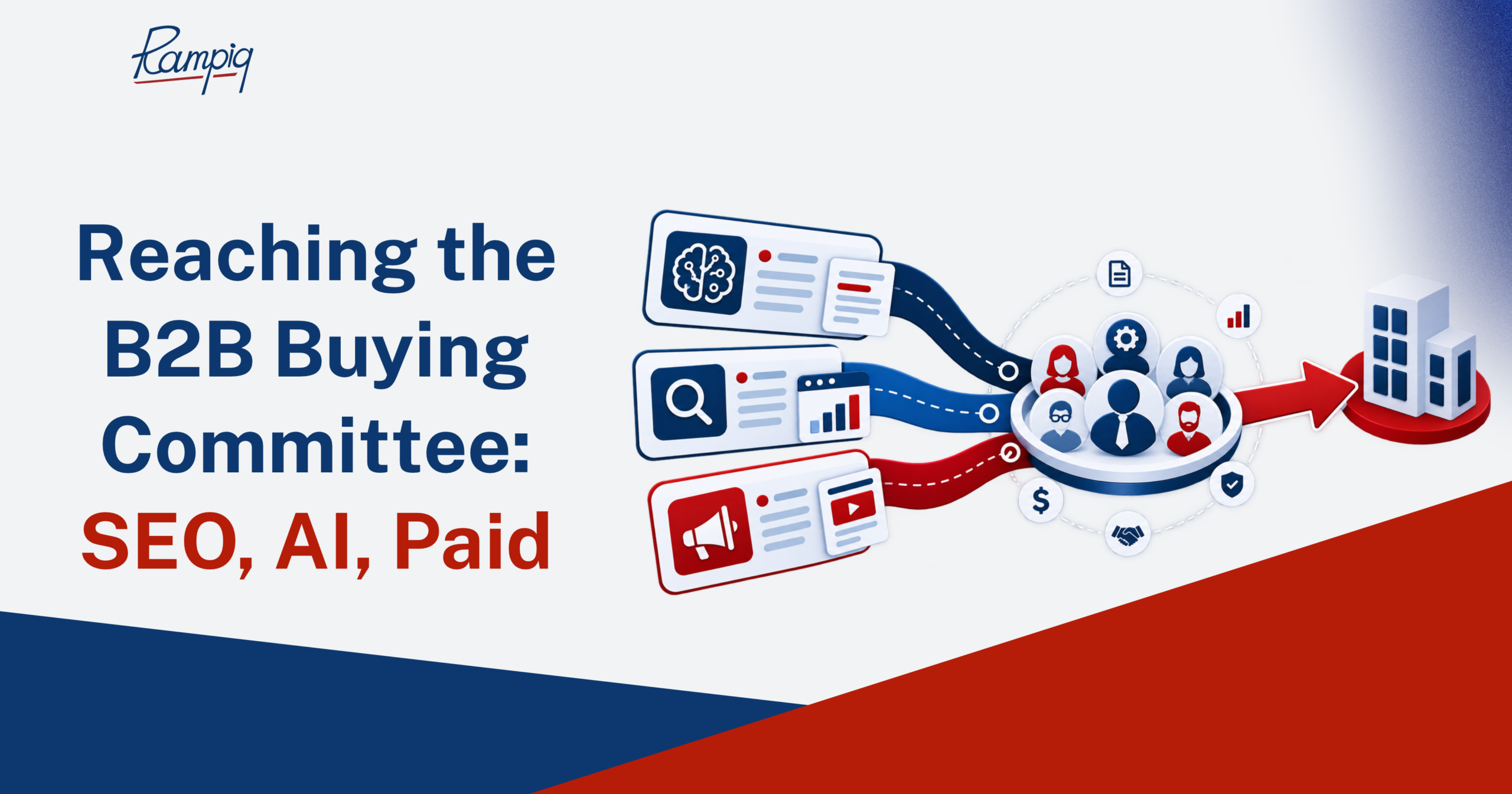
Learn how to reach B2B buying committees by combining AI Search, SEO, and paid media. See how to target different decision-makers, coordinate channels across priority accounts, and avoid overlapping spend, with real client examples.