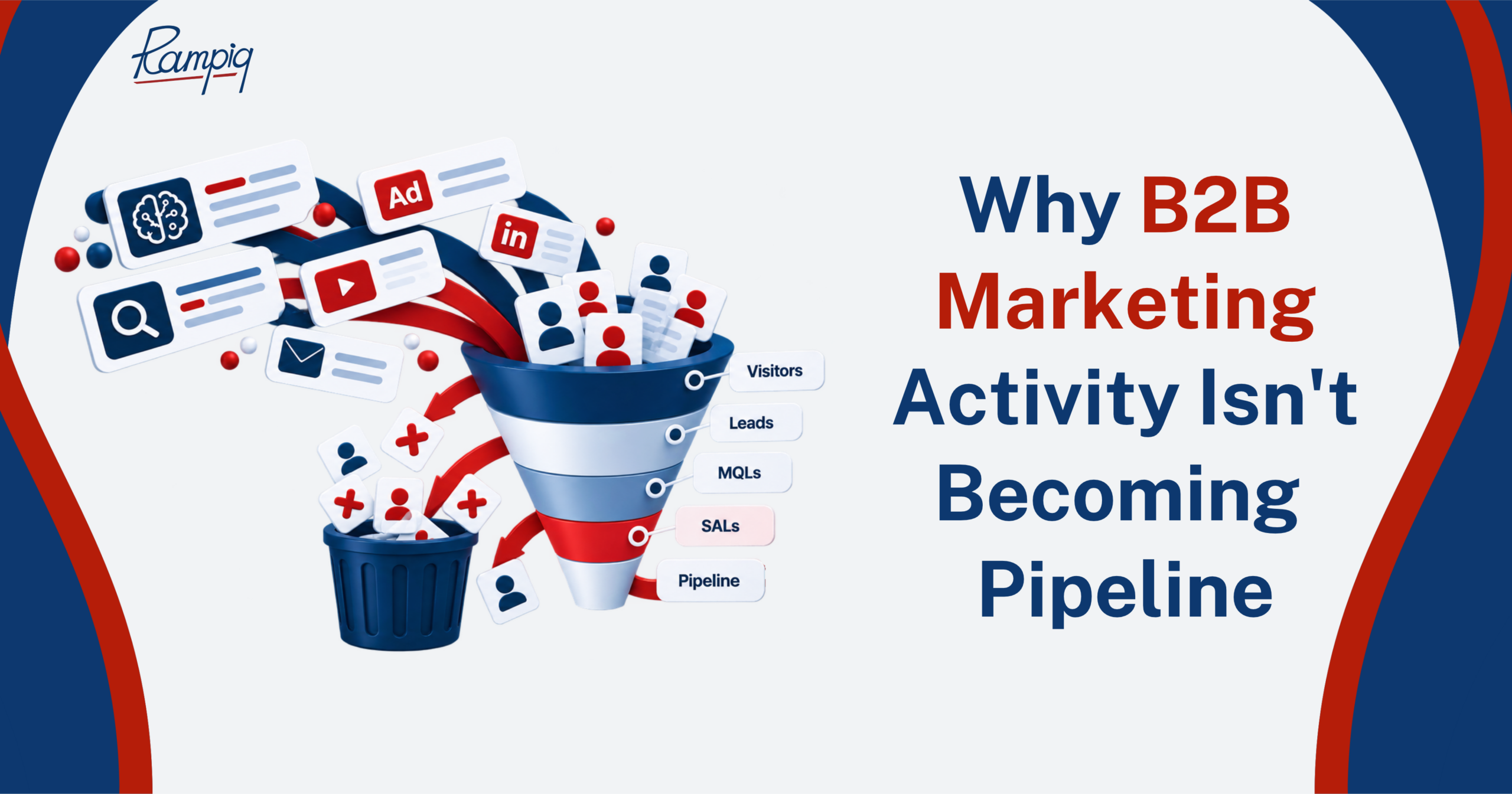
B2B marketing activity usually stops becoming qualified pipeline at the sales-acceptance step, where sales rejects leads that marketing already counted as qualified.
But the cause is measurement. Each channel gets scored on a metric from the wrong buyer stage.
Quick answer: Most B2B buyers rank their preferred vendors before they ever talk to sales, so traffic and form fills from people outside that shortlist look like demand and close like noise. Find the stage where conversion drops. Then judge every channel by the stage it is supposed to move.
Your lead numbers are real. They just aren’t measuring the part of the buying process where the deal gets decided.
The buying decision has moved upstream. The 6sense 2025 B2B Buyer Experience Report found that 94% of buyers ranked their shortlist by preference before contacting any vendor (nearly 4,000 buyers across North America, APAC and EMEA). First contact now happens 61% of the way through the buying process, down from 69%. In the same report, the pre-contact favorite wins the deal roughly 80% of the time.
So the dashboard fills up with sessions and webinar sign-ups. Meanwhile the shortlist forms where your reporting can’t see it: in AI answers and comparison pages.
traffic + leads ≠ shortlist presence.
Where the leak actually happens: the stage-by-stage diagnostic
A leaky B2B demand funnel is one where a specific stage converts far below the stages around it. To find it, measure conversion between every handoff.
The stages, defined
Demand waterfall: the stage-by-stage conversion model, inquiry → MQL → SAL → SQL → pipeline → closed-won. Forrester now runs it as the B2B Revenue Waterfall.
MQL (marketing-qualified lead): a lead marketing judges ready for sales, by score or form type.
SAL (sales-accepted lead): an MQL sales agrees to work. This is the handoff where the gap opens.
SQL (sales-qualified lead): a lead sales has confirmed has need, budget and timing.
Sales-accepted opportunity: a deal sales has opened in the CRM against real buying intent.
Pipeline velocity: how fast qualified opportunities move from creation to close.
One reason MQL-to-SAL breaks: the unit is wrong. Forrester reports that 95% of current purchases involve three or more people across two or more departments (Forrester, May 2021).
But lead scoring still rates one contact at a time.
The leak-point table
Score your funnel row by row. The first row where your answer is “yes” is where to start.
Stage
Symptom you’ll see
Likely cause
What to check
Visibility → inquiry
Traffic up, inquiries flat
Content ranks for terms your ICP doesn’t search
Share of sessions landing on problem and comparison pages
Inquiry → MQL
Many MQLs from content downloads
Score rewards activity, not fit or intent
MQLs by source against your ICP firmographics
MQL → SAL
Sales rejects or ignores most MQLs
Marketing and sales use different definitions of qualified
The rejection-reason field in your CRM
SAL → SQL
Accepted leads stall after first call
One contact engaged, buying group absent
Contacts per account at first meeting
SQL → pipeline
Opportunities open, then age out
Your company wasn’t on the pre-contact shortlist
Win rate on deals where you were first contact
Measure paid channels at the SAL row, not on cost per lead. One SAP-solutions provider had Rampiq rebuild its LinkedIn and Google Ads account structure and redesign its service pages. New PPC leads then made up 40% of its total sales pipeline, and 23% of them converted to sales-accepted leads (Clutch review, April 2024, self-reported by one client, not audited).
Mapping AI Search, SEO and paid media to buyer stage
Each channel has one buyer-stage job, and its success metric has to come from that stage. A common activity-to-pipeline gap comes from scoring a shortlist channel on lead volume. The mirror error is scoring a conversion channel on reach.
Channel
Buyer stage
Job
Metric that proves it
Metric that misleads
AI Search (ChatGPT, Perplexity, Gemini, AI Overviews)
Pre-contact research, shortlist forming
Get your company named in answers to buying-problem and comparison prompts
Owned citations on category prompts, AI referral sessions reaching product pages
Total impressions
SEO
Problem framing and vendor comparison
Win the pages buyers read while building the internal case
Organic conversions on problem and comparison pages
Blog traffic on terms outside your ICP
LinkedIn Ads
Buying-committee reach and trust
Put proof in front of every role in target accounts
Engaged contacts per target account, SAL rate
Cost per lead
Google Ads
High-intent capture
Convert buyers already searching for the category
SAL and SQL rate by campaign
Click-through rate
Your SEO is still producing rankings. The trouble is where they point: away from the stage where the shortlist forms.
Case IQ’s brief was to get more pipeline from existing content after a site migration and rebrand had cut visibility. Rampiq optimized existing pages that matched the ICP instead of commissioning new ones. Case IQ’s results are shortlist-stage numbers from the AI Search and SEO rows of the map: 850+ keywords ranking in AI Overviews and 145% growth in Top-3 rankings.
What this looks like in a real account
Avassa, an edge-computing application-management platform, came to Rampiq with the problem this article diagnoses: improving the conversion of website traffic into qualified pipeline opportunities, while reducing reliance on outbound and event-driven lead generation.
The work mapped channels to stages. A keyword strategy covered category-level and problem-driven searches. Content was structured for AI discovery on ChatGPT, Perplexity and Gemini. LinkedIn Ads were restructured around key buying roles, with remarketing layers.
Avassa’s results, year over year: AI Overview visibility up 2900%, AI referral traffic up 408%, and organic conversions up 89%.
The conversion figure is the one to copy as a reporting habit. Visibility gains only count when a conversion metric moves with them. These are one client’s results after a website migration, so treat them as a reference point for your own reporting.
Where to start
Pull last quarter’s MQLs and the rejection reasons sales logged against them. If that CRM field is empty, that’s your first finding.
Then rebuild reporting so each channel answers to its stage in the map above. To see AI visibility measured against pipeline before changing spend, read how we report on pipeline-attributed AI visibility. The full list of our services covers the paid side.
Are AI tools recommending your competitors instead of you?
Understand how AI platforms describe your brand vs. your competitors and the exact steps to flip those results.
MQLs stall because marketing and sales never wrote down the same definition of qualified. Fix that first: agree in writing which fit and intent signals make a lead worth a sales call, and log a rejection reason whenever sales passes on one.
What’s the difference between a leaky funnel and a slow one?
A leaky funnel loses buyers at one stage, while a slow funnel keeps them but moves them late. Leaks show up as a stage-to-stage conversion drop. Slowness shows up as falling pipeline velocity with steady conversion, so check stage conversion before blaming sales cycle length.
How do you measure marketing’s pipeline contribution without full attribution tooling?
Add a required “how did you hear about us” field to demo forms, and track SAL rate by source in your CRM. Self-reported source catches AI answers and peer referrals that click tracking misses. Review it monthly alongside opportunities created, not leads.
About the author
Liudmila Kiseleva
Liudmila is one of the best-in-class digital marketers and a data-driven, very hands-on agency owner. With top-level education and experience, Liudmila is a true expert when it comes to digital marketing strategies and execution.
More traffic and leads don't always mean more qualified pipeline. See where B2B leads drop off, why marketing and sales qualification often don't align, and how to measure AI Search, SEO, and paid media against the right buyer stages.
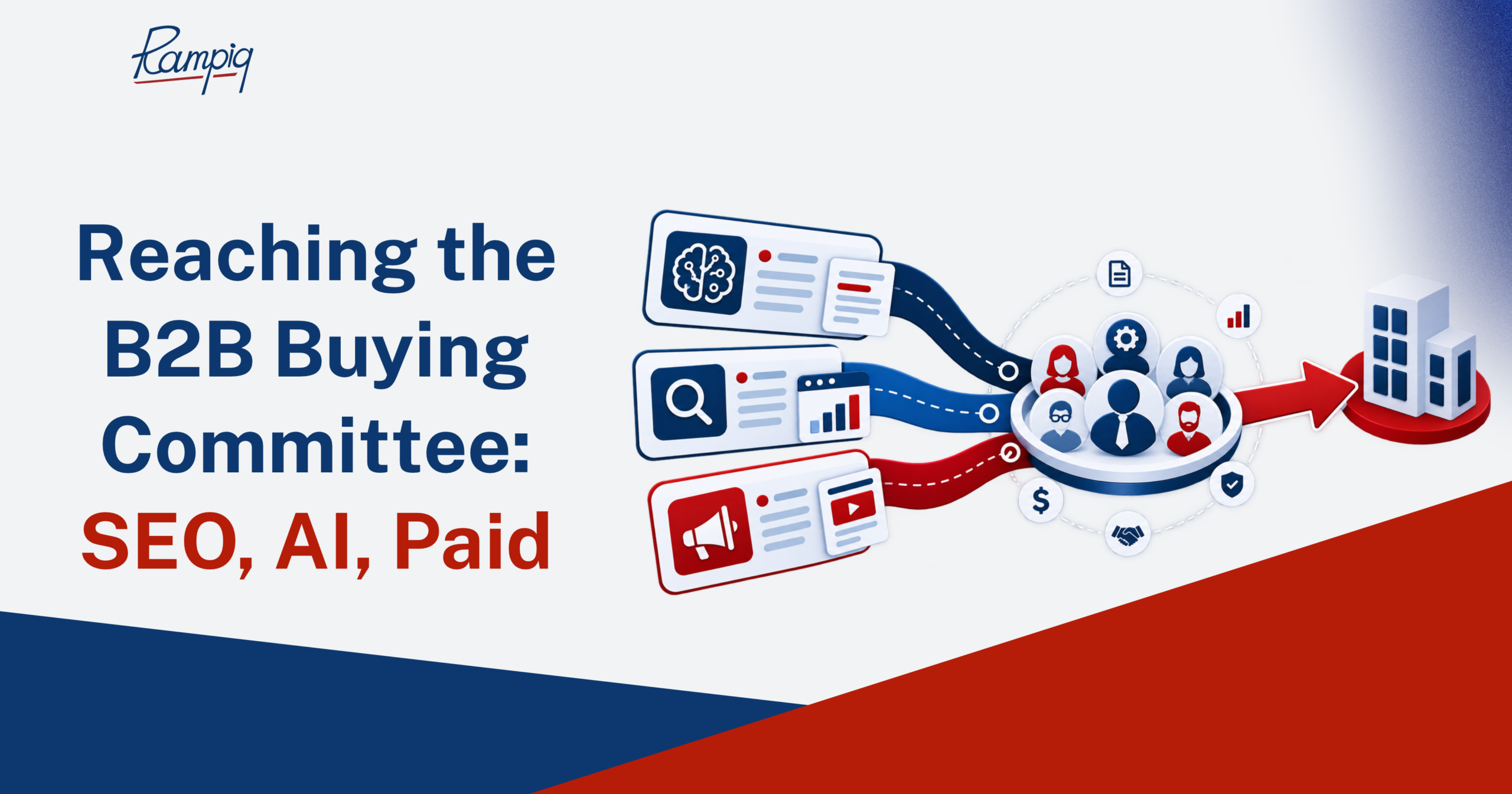
Learn how to reach B2B buying committees by combining AI Search, SEO, and paid media. See how to target different decision-makers, coordinate channels across priority accounts, and avoid overlapping spend, with real client examples.
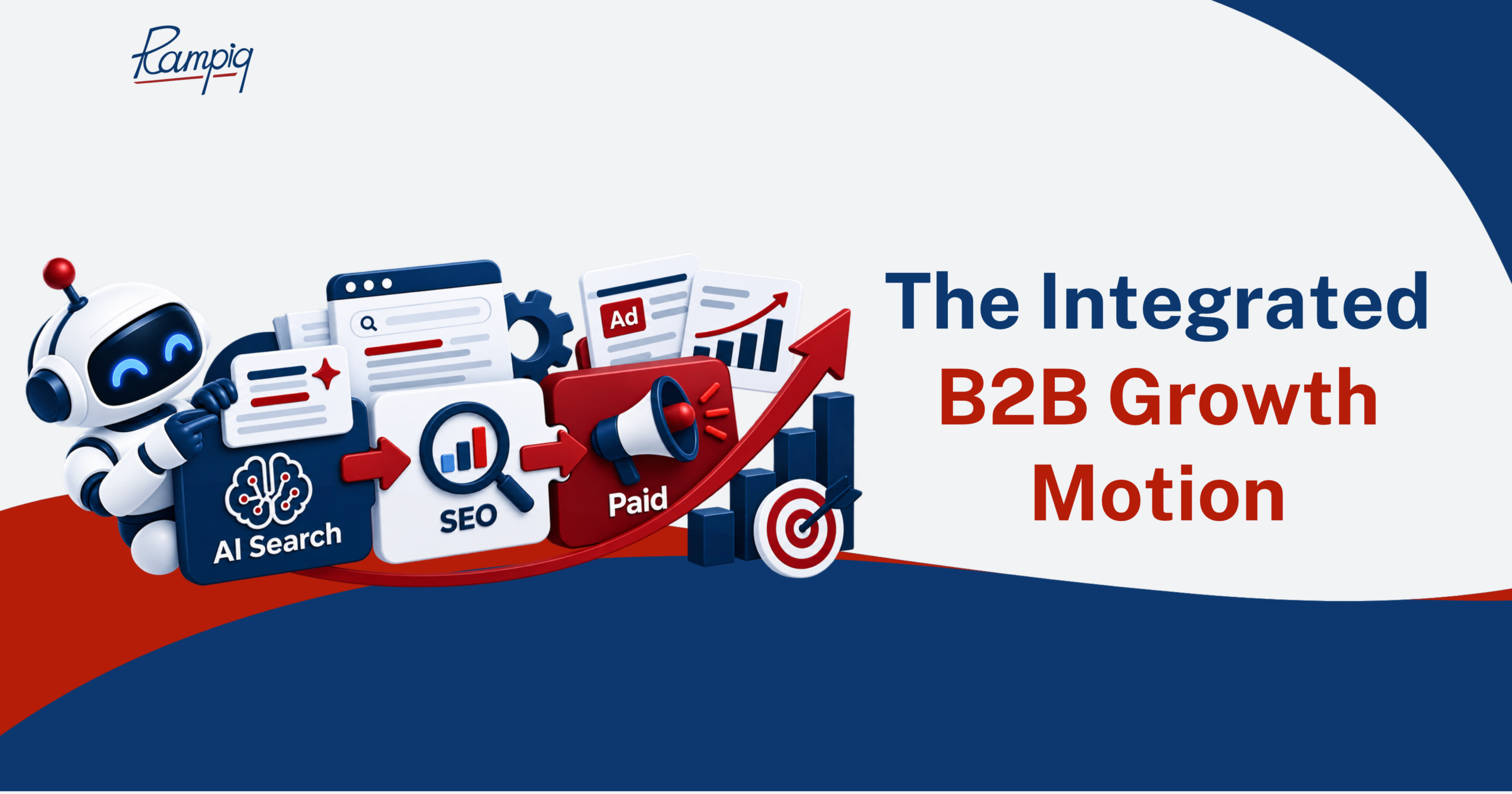
Learn how AI Search, SEO, and paid media work together to generate qualified B2B pipeline. See how to sequence these channels, measure their contribution to sales opportunities, and avoid common mistakes, with real client results.
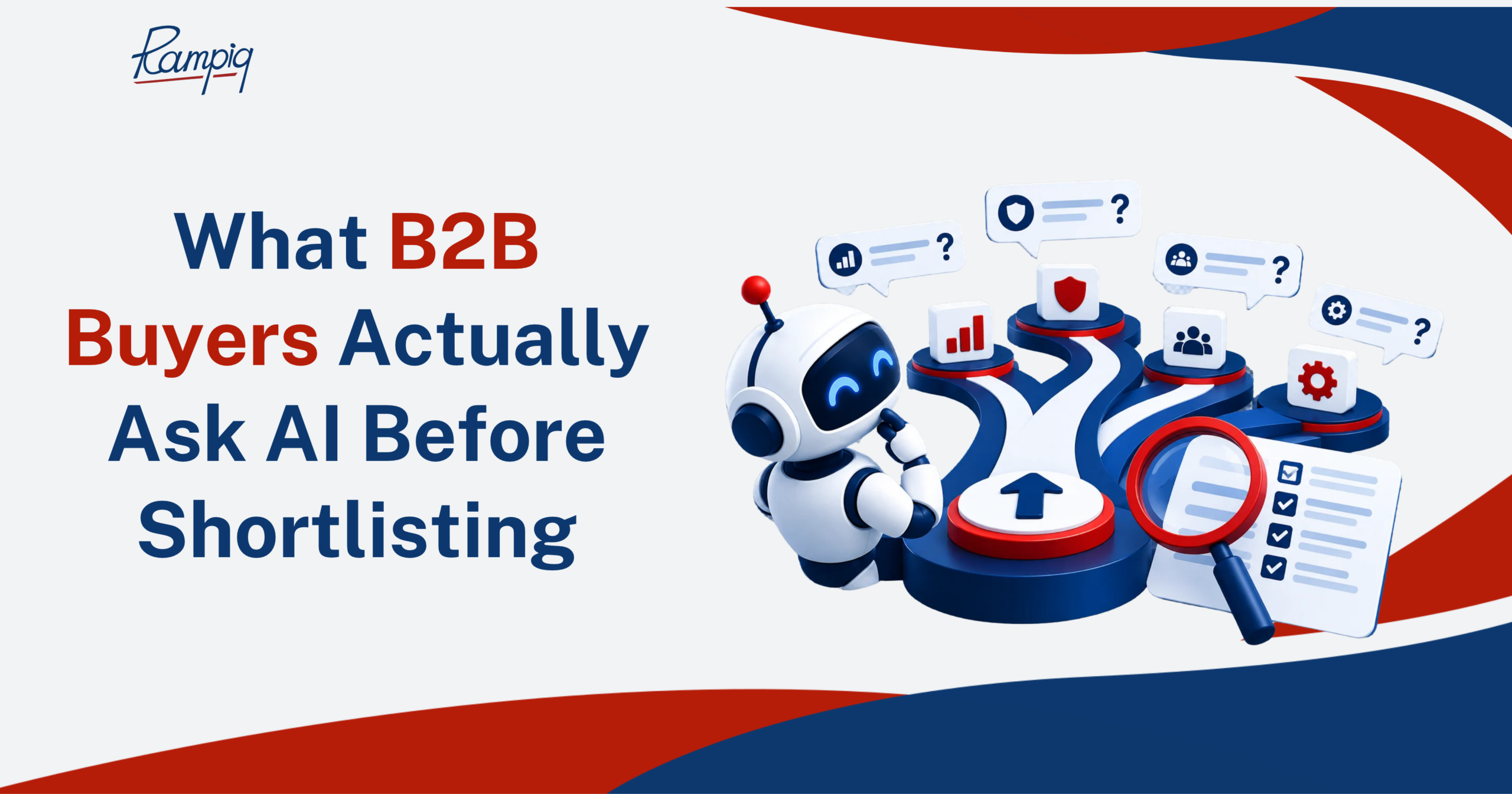
See how AI assistants build B2B vendor shortlists, which agencies get recommended, and what drives those recommendations. Based on real AI search data, learn why third-party mentions matter and how to improve your brand’s chances of being shortlisted.
See what AI visibility and GEO programs cost in 2026, what drives pricing, and what’s included at each budget level. Learn how to evaluate agency quotes before you commit.