1. Target comparison and alternatives queries
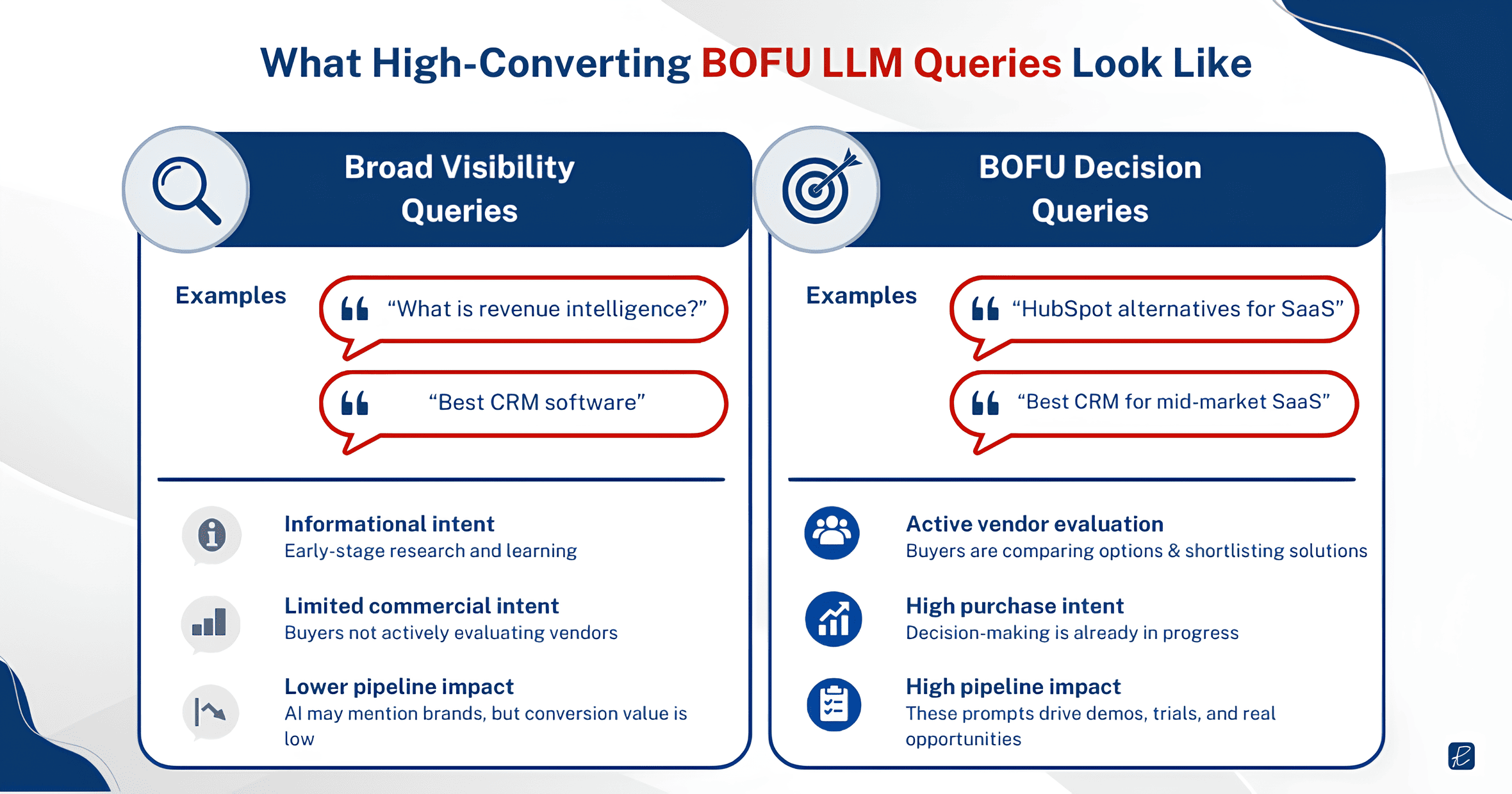
The highest-converting LLM prompts are comparative. Queries such as “X vs Y”, “Best X for [use case]”, or “Alternatives to X” are where purchase decisions take shape inside AI tools.
When we audit clients’ AI visibility for BOFU prompts, the pages that get cited are mostly comparison pages, alternatives pages, pricing breakdowns, and feature-by-feature evaluations. This holds across ChatGPT, Perplexity, and Google AI Overviews, etc.
The comparison content that earns AI citations has a visible evaluation framework:
- Stated criteria that the reader can follow
- Genuine negatives for every product, including your own
- Specific feature details instead of marketing copy
Be the most useful resource for a buyer who is already comparing and avoid positioning your product outright as the most favorable.
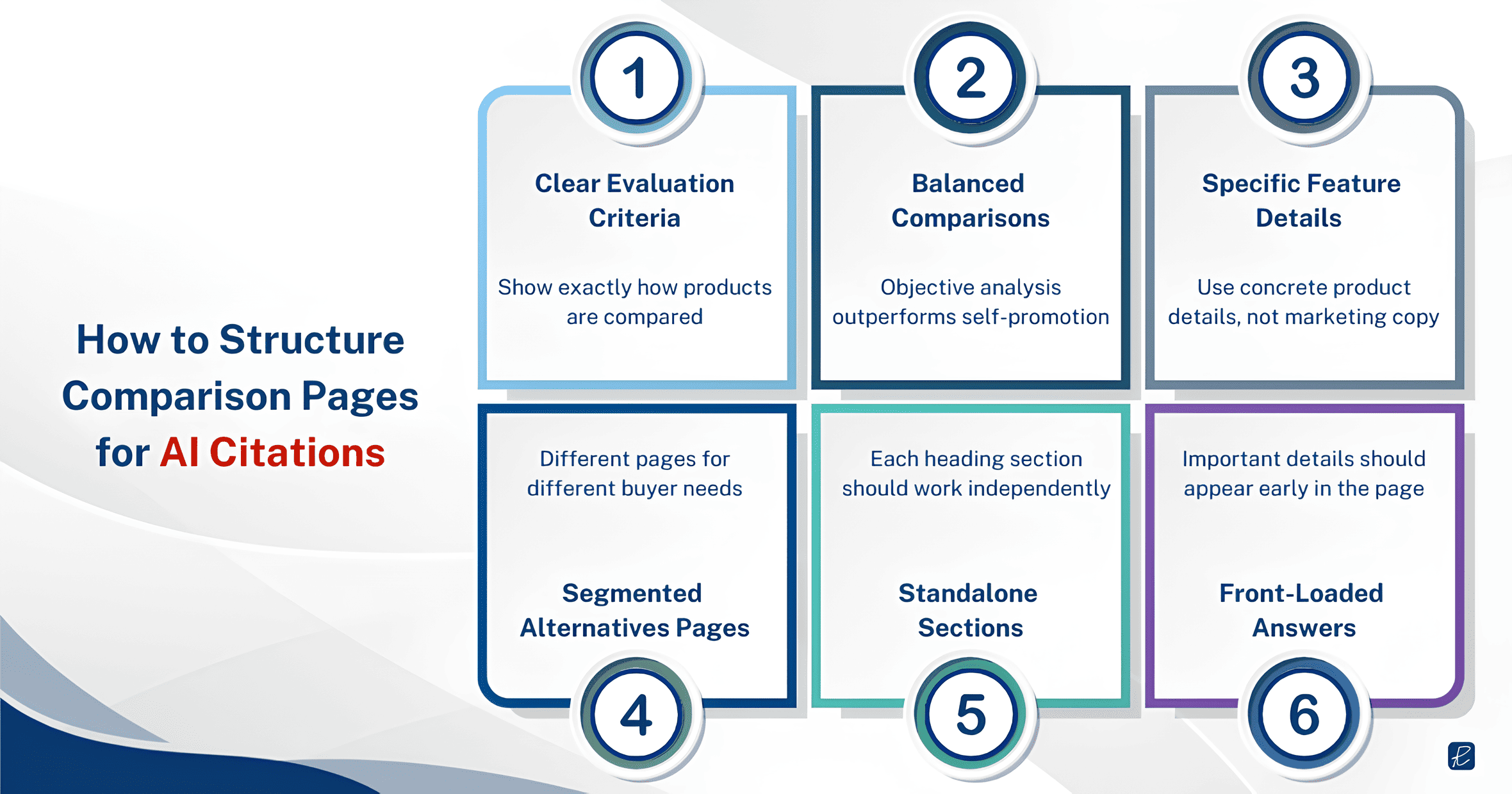
The same logic applies to “alternatives to” content. When a buyer asks an LLM “alternatives to [competitor],” the pages that earn LLM citations explain use-case fit, not just list names. “Alternative to X for teams that need Y” is a different page than “Alternative to X for enterprises with Z requirements.”
Brands can increase citation rate on competitor-comparison prompts by splitting a single “alternatives” page into multiple pages, each targeting a different buyer segment. These posts work even if you publish them as guest contributions on external reputable, industry-relevant websites.
One structural detail worth noting is that LLMs pull passages, specifically, the first ~30% of a page. Each section under a heading needs to stand alone as a complete, citable answer. If your pricing section doesn’t make sense without the product overview above it, the LLM probably can’t cite it either.
2. Rebuild landing pages for AI-informed visitors
The traditional B2B landing page assumes the visitor needs educating. It opens with a category definition, walks through the problem, explains the solution concept, and finally gets to the product. That structure was built for cold organic traffic.
LLM-referred visitors arrive pre-briefed. They’ve already asked the AI what the category does, which vendors offer it, and how options compare. They don’t need your “what is” section. What they actually need is:
- Pricing structure
- Integration compatibility
- Implementation timeline
- The specific gaps your product fills that competitors don’t
Strip category explainers or bury them below the fold.
Make the ICP statement explicit and early. For example, “Built for B2B SaaS companies with 50-500 employees” is more useful to this visitor than “A solution for businesses of all sizes.” Precision filters out poor-fit leads and accelerates good-fit ones.
Swap generic testimonials for decision-stage proof. A quote from a VP of Marketing at a 200-person SaaS company who says “We reduced onboarding from 6 weeks to 10 days” does more than a Fortune 500 logo strip. What works at this stage:
- Named results from identifiable companies
- Integration-specific case studies
- ROI metrics tied to concrete outcomes
These match where these visitors are in their buying process.
Add FAQ sections that answer the questions a buyer has right before requesting a demo:
- “Does it integrate with Salesforce?”
- “What does migration look like?”
- “Is there a minimum contract?”
For visitors, they resolve last-mile objections. For LLMs, FAQ content with schema markup creates extractable, citable answers to the exact prompts buyers type. Sites with structured data see up to 30% higher visibility in AI Overviews, and FAQ, Product, and Review schemas are the ones that matter most for BOFU pages.
3. Seed the third-party sources LLMs cite
Roughly 85% of LLM citations for broad category queries come from third-party sources, not your own website. For “best X software for Y use case” prompts, the AI pulls from G2 reviews, industry publication listicles, YouTube reviews, and Reddit threads. BOFU LLM conversion isn’t just about your own content. It’s about managing the ecosystem of sources LLMs trust when answering purchase-intent questions.
G2, Capterra, and TrustRadius carry significant weight. Ahrefs found that domains with profiles on these platforms have three times higher chances of being cited by ChatGPT. Most B2B brands have profiles on these sites but treat them as passive. Here’s what typically needs fixing:
| Action |
Benefit |
| Update profile text quarterly |
Match feature descriptions to your current product positioning |
| Encourage recent customer reviews |
LLMs weight freshness: pages updated within two months earn 28% more AI citations |
| Complete feature comparisons |
Incomplete profiles lose citations to competitors who fill theirs out |
The aggregate data says Reddit and Wikipedia are the most-cited domains across LLMs. That’s true at scale, but misleading for BOFU strategy. When you filter for high-intent prompts in a specific B2B category, those platforms often barely register.
Use an AI visibility tool like Amadora, Scrunch, or Otterly to run your actual target BOFU prompts and see which domains get cited. You’ll typically find two or three industry publications, a couple of review aggregators, and a handful of competitor blogs. A guest post or earned placement on a domain that LLMs already trust for your category is worth more than fifty Reddit comments.
YouTube reviews and Reddit threads also appear in BOFU citations (Perplexity pulls 46.7% of its citations from Reddit), but these are earned signals you can encourage, not manufacture. The actionable move is monitoring whether outdated threads misrepresent features you’ve since fixed, because that stale information keeps feeding LLM responses.
4. Shorten the conversion path for LLM-ready visitors
This is where many B2B sites leave money on the table. Someone arrives from a ChatGPT citation, already pre-sold on the category and already aware of your product’s positioning. Then you make them fill out a 12-field form, wait for an SDR to call, and sit through a qualification call before they can see the product.
That friction costs you conversions because these visitors have already done their research. They’re validating a near-final decision, not entering your nurture sequence.
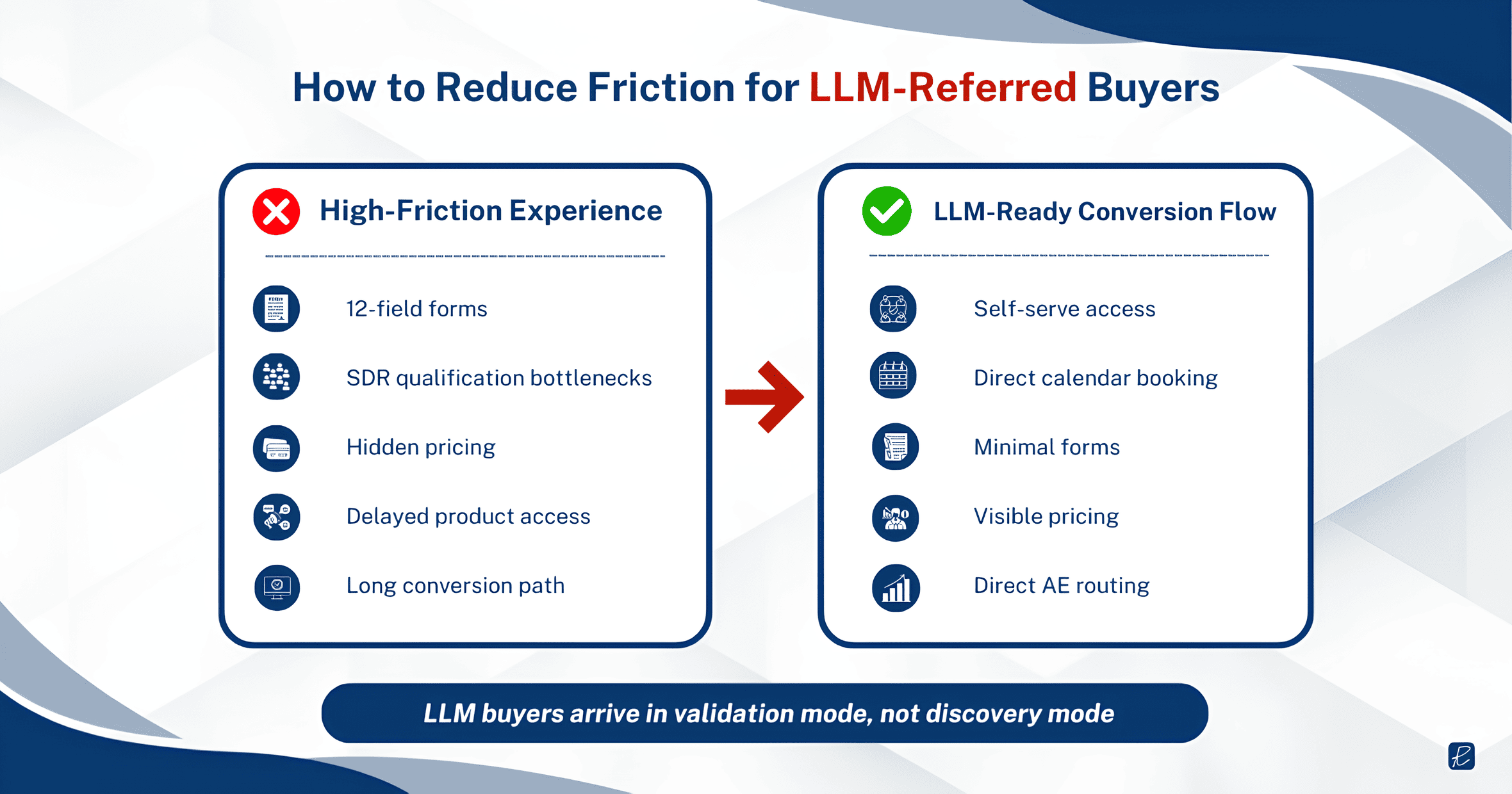
Three changes that reduce friction for this traffic segment:
- Default to self-serve where the product allows it: “Start free” beats “Book a demo” for a visitor who has already compared three vendors in ChatGPT and decided yours is worth trying. Where a demo is genuinely necessary, embed a calendar booking widget directly on the landing page instead of a form that goes into an SDR queue. If you must use a form, strip it to name, work email, company. Every additional field adds friction that disproportionately affects visitors who are ready to buy.
- Make pricing visible: This is a long-standing B2B debate, but for LLM-driven conversions specifically, visible pricing removes one of the last objections a pre-briefed buyer has. “Contact sales for pricing” is a conversion killer for this traffic segment. Even a starting-at price gives the visitor enough to continue down the path.
- Route LLM-attributed leads directly to AEs: These visitors have already done the vendor comparison, and a qualification step that asks “So what are you looking for?” is redundant for someone who can tell you exactly what they need.