To run SEO, GEO and LinkedIn Ads as one B2B program, give each channel a named owner. Make one person accountable for what they produce together, and run all of them from one calendar and one topic list. The specialists stay specialists. The planning, the priorities and the pipeline report are shared.
Quick answer: A single B2B program for SEO, GEO and LinkedIn Ads needs three channel owners and one accountable program lead. Its rhythm is fixed: weekly paid optimization, a citation check every two weeks, a monthly joint review and a quarterly reset of topics and budget. Start with measurement and topic research. Publish and structure the content next, then use LinkedIn Ads to put that content in front of target accounts.
Why Do SEO, GEO and LinkedIn Ads Break Down When Run Separately?
They break down because buyers don’t use them separately. In a survey of 519 US B2B professionals who use AI at work, 66% regularly use AI to research vendors, 75% still use Google or other search engines in the same research, and 41% start with AI and then validate through search (Semrush, July 2026; fieldwork March to April 2026).
Your SEO team may well be hitting its ranking targets. The buyer, meanwhile, met your brand in an AI answer, searched your name, then saw a LinkedIn ad. Three different people planned those touches from three different topic lists.
Run apart, the failure is mechanical. Each channel reports its own wins. Three topic lists ≠ one program, because nobody decides which buying problem the quarter is about. Budget moves to whichever dashboard looks best that month.
Who Owns What in a Single B2B Program?
An operating model for an integrated B2B growth program defines who owns each channel and who is accountable for the combined result. It also fixes which decisions get made together. Name the roles. Generic “SEO team” and “paid team” labels are where hand-offs get lost.
GEO (generative engine optimization) is the work of getting your content cited and recommended in AI answers from ChatGPT, Perplexity, Gemini and Google AI Overviews. SEO is measured in rankings, GEO in citations. In practice GEO needs its own owner (see what GEO execution involves).
The four seats:
SEO/content lead: keyword and topic research, content briefs, the publishing calendar, technical SEO and rankings.
GEO/AI-search owner: the tracked prompt set, citation tracking, AI Share of Voice, and schema and passage structure on priority pages.
Paid media manager: LinkedIn Ads audiences, creative, budget, bidding, conversion tracking and CRM audience syncs.
Program lead: the shared topic list, the quarterly plan and the pipeline report. Usually the head of demand gen.
RACI is a responsibility matrix: Responsible does the work, Accountable signs off and owns the outcome, Consulted gives input before the decision, Informed hears about it after.
Decision
SEO/content lead
GEO owner
Paid media manager
Program lead
Quarterly priority topics
R
C
C
A
Content briefs and publishing
A, R
C
I
I
Prompt set and citation tracking
C
A, R
I
I
LinkedIn audiences and creative
C
I
A, R
C
Budget shifts between channels
C
C
R
A
Pipeline report
C
C
C
A, R
In a lean team one person can hold two seats. Keep the accountable seat separate from the paid seat. Otherwise the person spending the budget also grades it.
The Operating Cadence Calendar
An operating cadence is the recurring schedule of releases, checks and reviews that keeps the channels in sync. Each channel moves at its own speed: LinkedIn Ads data changes weekly, AI citations shift over weeks, rankings over months. The calendar sets the speed of each loop and the point where they meet.
Rhythm
SEO/content
GEO
LinkedIn Ads
Joint output
Weekly
Publish to the calendar, fix technical issues
Spot-check priority prompts after new content goes live
Adjust bids and budgets, retire fatigued creative, pull lead quality from the CRM
30-minute stand-up: what shipped, what’s running in ads
Every two weeks
Refresh one or two existing pages
Full check of the tracked prompt set; log which pages AI engines cite
Rotate in creative built from newly published content
Updated list of winning topics
Monthly
Ranking and traffic review, next month’s briefs
AI Share of Voice against competitors, schema fixes
Creative refresh, audience review against target accounts
Joint review: one report, with visibility metrics and pipeline kept apart
Quarterly
Topic cluster plan
Prompt set refresh
Budget reset
Next quarter’s buying problems and channel budgets
To coordinate SEO and PPC in one roadmap, run both from a single operating cadence calendar. The quarterly row sets one topic list, and every weekly and monthly action draws from it.
The monthly joint review is the meeting teams drop first. Keep it. Rampiq ran Case IQ’s post-migration recovery (a content-performance audit and optimization plan) on a monthly review cadence with the client’s in-house marketing team. Case IQ reached 3,650+ keywords in positions 1-10 (one client’s result).
How to Sequence SEO, GEO and LinkedIn Ads in the First 90 Days
Start with measurement and topics, then content, then paid amplification. LinkedIn Ads can go live early, but on pages that can convert and audiences you already know.
Days 1-30: Measurement and Topics
Set up conversion tracking and the CRM sync, so LinkedIn leads and organic leads land in the same pipeline view.
Take a baseline: rankings, citations on a tracked prompt set, current LinkedIn lead quality.
Pick the buying problems the quarter will cover and turn them into the shared topic list.
Audit the pages paid traffic will land on.
Days 31-60: Content and Structure
Publish or refresh the priority pages, with answer-first passages and schema for GEO.
Start LinkedIn retargeting on site visitors and CRM contacts, with a small test budget on target accounts.
Days 61-90: Amplify and Close the Loop
Promote the best-performing pages to target accounts and buying-committee roles.
Run the first full monthly review with pipeline data next to visibility data.
The paid side depends on the pages ads land on. Rampiq restructured an SAP-solutions provider’s LinkedIn and Google Ads together with a service-page redesign. The client’s Brand Manager reported PPC generating 40% of total sales pipeline and a 23% conversion rate from PPC leads to sales-accepted leads (self-reported Clutch review, one client).
How the Channels Feed Each Other
The content-to-ad feedback loop is the hand-off that makes three channels one program. Winning organic and GEO topics feed LinkedIn Ads targeting and creative. Ad engagement data feeds back into content priorities.
SEO and GEO surface the topics that win: pages reaching top-3 rankings or getting cited in AI answers.
The paid media manager turns those pages into LinkedIn creative aimed at target accounts and buying-committee roles.
LinkedIn engagement by job function and company shows which problems the buying committee responds to. That goes into next month’s content briefs.
AI answers and branded search catch the buyers the ads warmed up. In the same Semrush survey, after an AI mention 71% of buyers visit the vendor’s website and 63% search for the company on Google.
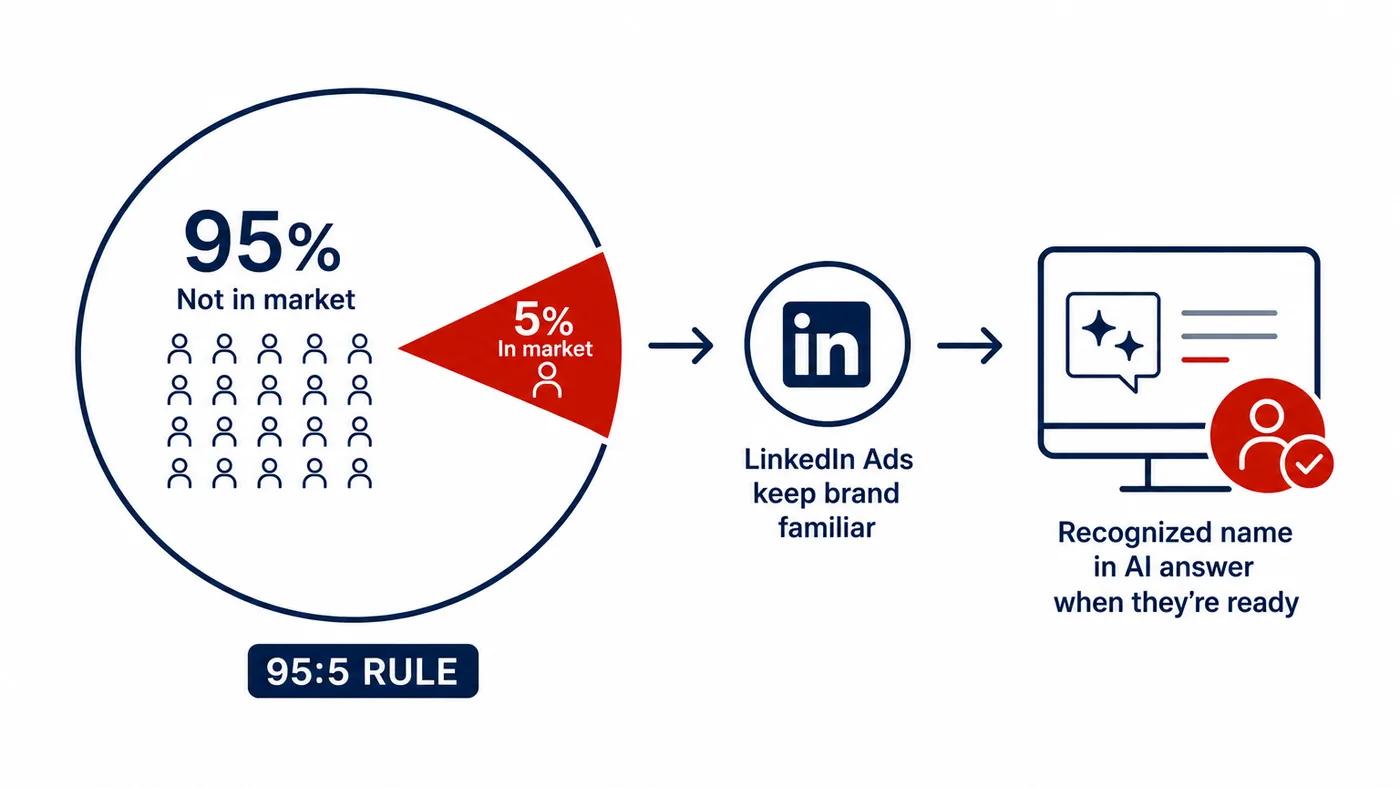
Most target accounts aren’t buying yet. The Ehrenberg-Bass Institute’s 95:5 rule, from John Dawes, holds that only about 5% of B2B buyers are in market at any given time. LinkedIn Ads in this program keep the brand familiar to the other 95%, so the name they meet later in an AI answer is one they recognize.
Build the ad audiences from the same buying roles the keyword strategy targets. Avassa’s program paired a keyword-strategy overhaul with a LinkedIn Ads restructure aimed at edge-computing and IIoT buying roles. Rampiq reports Top-20 keyword visibility up 575% and organic conversions up 89% year over year (Avassa case study, one client recovering from a site migration).
How Do You Know the Program Is Working?
Read the program on one scorecard with three layers, and never let a visibility number stand in for a pipeline number.
Layer
What to track
Owner
Visibility
Rankings, AI citations, AI Share of Voice, AI referral traffic
SEO/content lead and GEO owner
Engagement
LinkedIn engagement from target accounts, branded search, return visits
Paid media manager
Pipeline
SQLs, opportunities from target accounts, stalled opportunities re-engaged
Program lead
A rising citation count proves the brand is being found. It says nothing yet about lead quality or revenue, which need their own conversion tracking and CRM data.
Set timelines per layer. In Rampiq’s managed AI Search programs, first meaningful signals typically appear within 60 to 90 days, and revenue-attributable traffic typically compounds between months 4 and 9. Those are indicative timelines, not guarantees, so judge the first quarter on visibility and engagement.
See Where Competitors Beat You in ChatGPT
Are AI tools recommending your competitors instead of you?
Understand how AI platforms describe your brand vs. your competitors and the exact steps to flip those results.
How do you run SEO, GEO and LinkedIn Ads as a single B2B program?
Give each channel a named owner and make one program lead accountable for the combined pipeline. Run all three from one quarterly topic list and one calendar: weekly paid optimization, citation checks every two weeks, a monthly joint review and a quarterly budget reset.
How do you sequence SEO, GEO and LinkedIn Ads?
Measurement and topic research come first, content and on-page structure second, LinkedIn Ads amplification third. Retargeting and CRM audiences can start in month two, before broader prospecting spend.
What is a single B2B program for organic and paid?
It is one plan, one budget conversation and one report covering organic search, AI search and paid social. Each channel keeps a specialist owner, while topics, timing and pipeline reporting are shared.
How do you coordinate SEO and PPC in one roadmap?
Build the roadmap around the buying problems you want to own each quarter. That topic list sets what SEO publishes and what paid promotes, and the monthly review moves budget toward the topics producing qualified pipeline.
Where Rampiq Fits
Rampiq runs this kind of program alongside in-house marketing teams through Signal Bridge. It connects brand visibility, demand generation, paid media and pipeline activation. See how Rampiq runs this program for clients. If the paid seat is the gap, LinkedIn Ads execution through Pipeline Activator covers ICP calibration, CRM audience segmentation and target account campaigns.
About the author
Liudmila Kiseleva
Liudmila is one of the best-in-class digital marketers and a data-driven, very hands-on agency owner. With top-level education and experience, Liudmila is a true expert when it comes to digital marketing strategies and execution.
SEO, GEO, and LinkedIn Ads work better when teams share one plan. Get a practical 90-day roadmap for coordinating content, AI Search visibility, and paid campaigns, with clear responsibilities, reporting, and a shared focus on qualified pipeline.
Disconnected marketing channels can generate leads without contributing to qualified pipeline. See how to align CRM data, attribution, and sales handoffs across AI Search, SEO, and paid media, and measure each channel’s contribution to sales opportunities.
One integrated growth partner or separate SEO, PPC, and GEO agencies? Compare costs, accountability, and pipeline measurement, and see when each model makes sense for your B2B business. Plus, what to check before choosing an agency.
Stalled B2B deals aren't always lost opportunities. See how to identify why deals stop moving, re-engage decision-makers through targeted outreach and LinkedIn Ads, and bring qualified opportunities back into your sales pipeline.
Your existing blog archive could be a source of AI citations without adding more content. See how to audit old posts, decide what to merge, retire, or refresh, and restructure pages for AI Search while protecting existing SEO rankings.
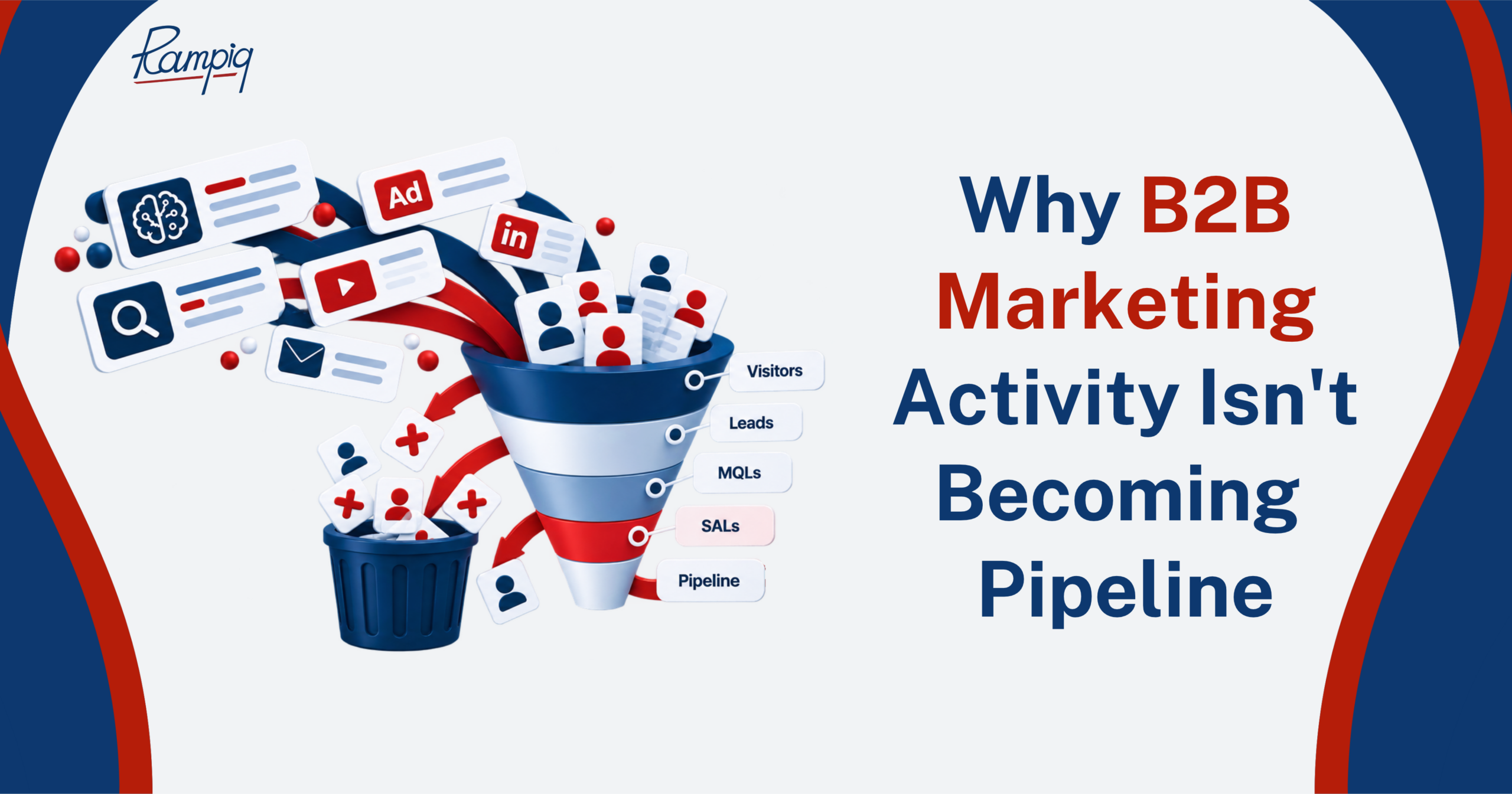
More traffic and leads don't always mean more qualified pipeline. See where B2B leads drop off, why marketing and sales qualification often don't align, and how to measure AI Search, SEO, and paid media against the right buyer stages.