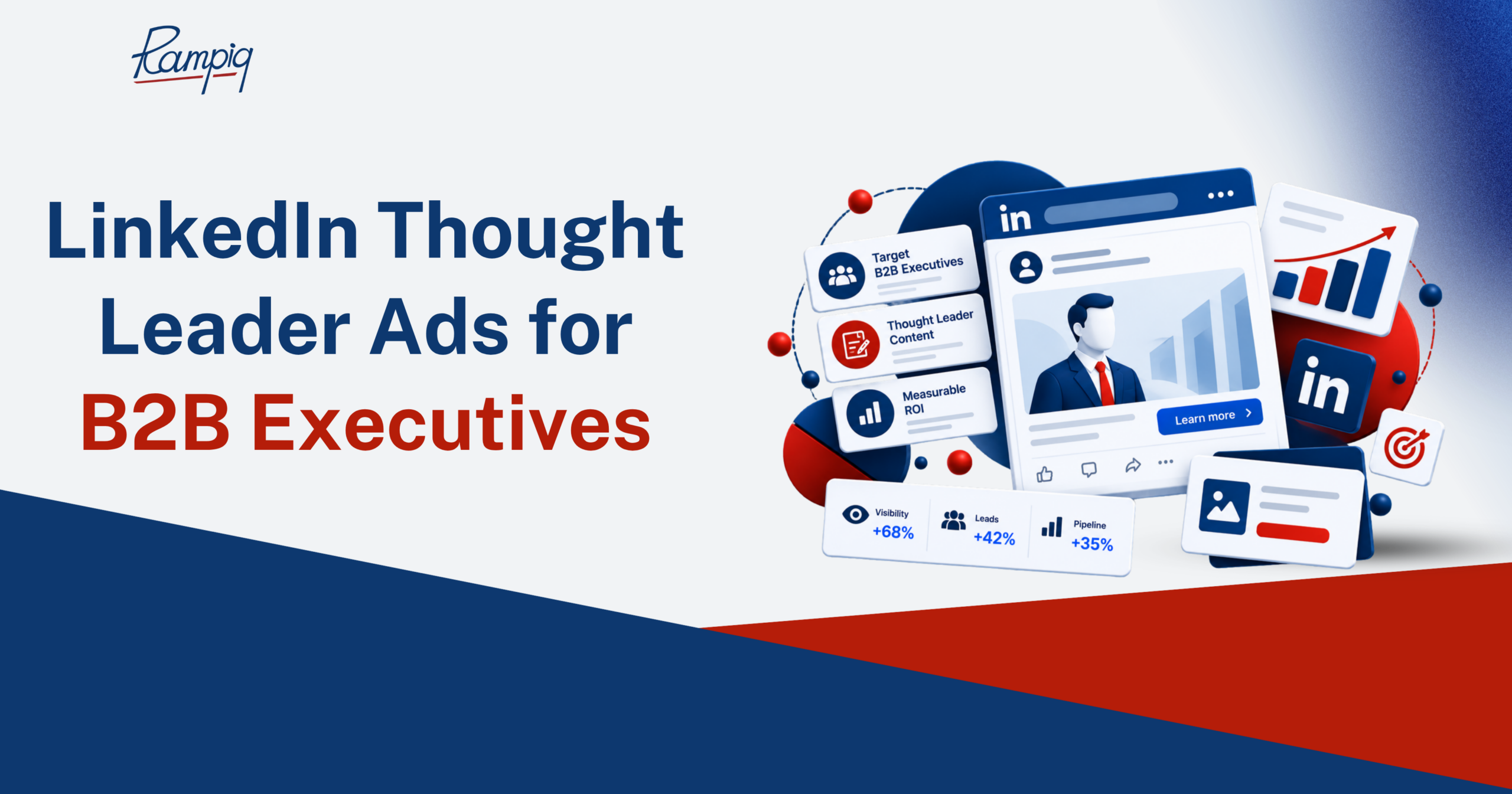
LinkedIn Thought Leader Ads bought the cheapest median click of four LinkedIn ad formats in a 2026 benchmark of B2B advertisers. You pay to promote a post an executive (or any member who approves) already published, and it runs under their name instead of your company Page’s.
The catch is scope. They buy reach and engagement, and they can’t carry a lead form or a CTA button.
Quick answer: Thought Leader Ads promote an existing personal LinkedIn post as a paid ad. You pick the post in Campaign Manager and the author approves the request. The post then runs unchanged as a single image or video ad under the Brand Awareness or Engagement objective, with Video Views also available for video posts. A 2026 benchmark of 161,256 B2B ads put the median click at $2.29, against $13.23 for single image ads.
A Thought Leader Ad is a personal post, published by a person rather than a company Page, that a company pays to show to a targeted audience. The post keeps the author’s name and photo, and the ad is labeled “Promoted by” your company.
The setup runs through Campaign Manager’s approval flow:
Pick an objective. LinkedIn’s Thought Leader Ads product page lists Brand Awareness, Engagement and Video Views. Any other objective hides the format later in setup.
Choose the ad type. Single image ad for an image post, video ad for a video post.
Find the author. Search for an employee associated with your Page, or a 1st- or 2nd-degree connection, or paste the post URL.
Request permission. Campaign Manager sends the author a request, and they approve or deny it. Nothing runs without that approval.
Select the approved post as the creative and set targeting and budget as for any campaign.
The post runs as it is. Per LinkedIn’s ads guide, you can’t add a headline or intro text, LinkedIn adds no URLs, and there are no CTA buttons. Links the author already put in the post stay live.
Eligibility is wider than employees. In March 2024 LinkedIn opened Thought Leader Ads to posts from members outside the company, with global rollout by the end of that month (MarTech, 15 March 2024). A customer, an analyst or a creator can now be the face of your ad, if they say yes.
Which executive posts are worth promoting
Promote the post a buyer would save, not the one your CEO is proudest of. Paid distribution amplifies whatever the post already is.
Run each candidate through this checklist:
Credibility on the topic beats follower count. A small-company founder who has done the job is a stronger author than a well-known executive talking outside their lane.
Match the author to the buying role you target. Rampiq rebuilt Avassa’s LinkedIn Ads around edge-computing and IIoT buying roles (one client). The author’s expertise should sit inside the role your campaign targets.
Pick a post with a point of view. An opinion, a data point from their own work, a story of what went wrong, or a how-to all give the reader something to react to.
Drop anything that reads like an ad. Product pitches and jargon lose the reason this format works, which is that it reads like a person talking.
Check the format before you ask. Image and video posts qualify, while posts with multiple images, polls or a document are ineligible.
Ask for approval only after the post clears the list. Every request costs the author a decision.
Thought Leader Ads vs. Sponsored Content
Sponsored Content is LinkedIn’s standard company Page ad format. The Page is the speaker, and you control the copy, the headline and the CTA. Thought Leader Ads trade that control for a person’s voice.
Thought Leader Ads
Sponsored Content
Speaker
A member’s personal post
Your company Page
Label
“Promoted by” your company
“Promoted”
Headline and CTA button
None, post runs as published
Yours to write
Objectives
Brand Awareness, Engagement, Video Views
Any campaign objective
Approval
Author must approve each request
None beyond Page permissions
Edits
Only the author can edit
You edit the ad
Use both. Thought Leader Ads warm a cold account list on a person’s credibility. Sponsored Content then asks the warmed audience to act, because it’s the format that can carry a lead form. Ask how an agency splits the two when you’re choosing a LinkedIn marketing ads agency.
What Thought Leader Ads cost to run
Thought Leader Ads have the lowest median cost per click of the four formats below, though not the lowest CPM. The figures below are third-party medians from ZenABM’s LinkedIn Ads Benchmarks 2026 (211 B2B companies, 161,256 ads, $5.5M in spend across 29 countries, published 16 February 2026; the period the data covers isn’t stated).
Format
Median CTR
Median CPC
Median CPM
Thought Leader Ads
2.68%
$2.29
$49.37
Single image ads
0.42%
$13.23
$59.15
Video ads
0.24%
$15.61
$38.94
Carousel ads
0.32%
$13.30
$45.28
Read the table by what you’re buying: the same spend buys far more clicks when the post comes from a person.
Your account’s numbers will differ with audience size, targeting and bid strategy. Treat these medians as a baseline snapshot to compare your first month against.
What Thought Leader Ads return, and what they won’t do
Thought Leader Ads return attention. That means impressions, engagement, follows and profile visits for the author. They won’t return leads directly, because the format has no lead or conversion objective. Cheap clicks ≠ pipeline.
Two limits shape how to plan them:
The author owns the creative. Edits come only from them, so agree on the final wording before you send the approval request.
Results blend with organic. The author sees organic and paid performance combined on their post. The paid-only breakdown stays in your Campaign Manager reporting. LinkedIn’s product page recommends saving the post’s organic numbers before the campaign starts, so you can measure what the spend added.
Judge them on engagement cost against your other formats, and on whether the engaged accounts later show up in Sponsored Content and sales conversations.
Rampiq runs Thought Leader Ads inside the Scale tier of its LI Pipeline Activator Program (from $3,975/month), alongside content recommendations. If you want them planned as part of a pipeline program, see our LinkedIn Ads service.
See Where Competitors Beat You in ChatGPT
Are AI tools recommending your competitors instead of you?
Understand how AI platforms describe your brand vs. your competitors and the exact steps to flip those results.
Which company Page does a Thought Leader Ad run under?
Always the parent LinkedIn Page. An ad account linked to a Showcase Page can create Thought Leader Ads, but the ad is tied to the parent Page.
About the author
Liudmila Kiseleva
Liudmila is one of the best-in-class digital marketers and a data-driven, very hands-on agency owner. With top-level education and experience, Liudmila is a true expert when it comes to digital marketing strategies and execution.
One integrated growth partner or separate SEO, PPC, and GEO agencies? Compare costs, accountability, and pipeline measurement, and see when each model makes sense for your B2B business. Plus, what to check before choosing an agency.
Stalled B2B deals aren't always lost opportunities. See how to identify why deals stop moving, re-engage decision-makers through targeted outreach and LinkedIn Ads, and bring qualified opportunities back into your sales pipeline.
Your existing blog archive could be a source of AI citations without adding more content. See how to audit old posts, decide what to merge, retire, or refresh, and restructure pages for AI Search while protecting existing SEO rankings.
More traffic and leads don't always mean more qualified pipeline. See where B2B leads drop off, why marketing and sales qualification often don't align, and how to measure AI Search, SEO, and paid media against the right buyer stages.
Learn how to reach B2B buying committees by combining AI Search, SEO, and paid media. See how to target different decision-makers, coordinate channels across priority accounts, and avoid overlapping spend, with real client examples.
Learn how AI Search, SEO, and paid media work together to generate qualified B2B pipeline. See how to sequence these channels, measure their contribution to sales opportunities, and avoid common mistakes, with real client results.